About this Order
Use of the Filioque in the Gallo-Russo-Byzantine and Anglican-Byzantine Liturgy
Types of Bread Used in this Rite
Using the Chalice Instead of the Ciborium for Distribution

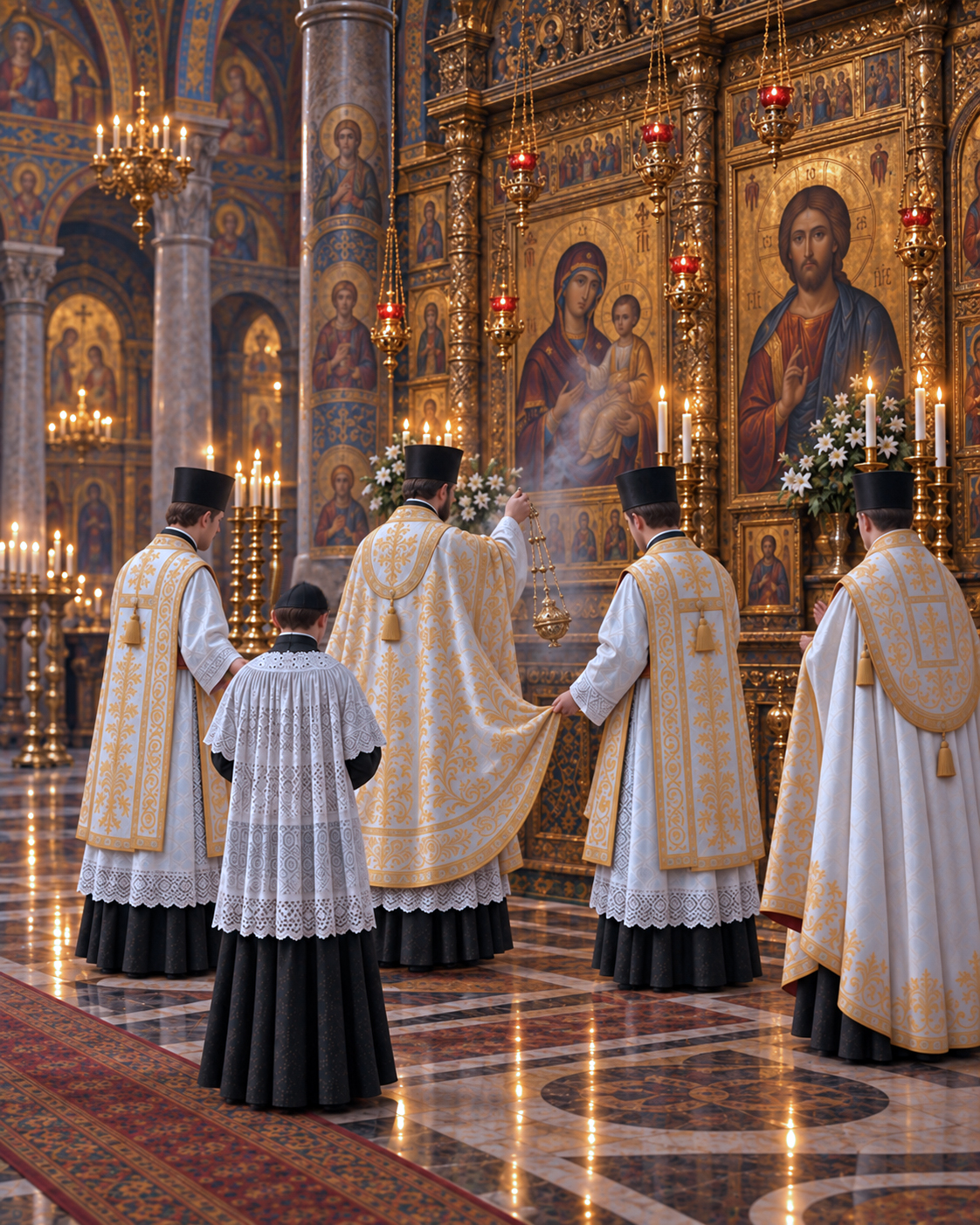
United Roman-Ruthenian Church · Liturgical Life
An illustrated journey through the prayers, ceremonial actions, sacred vessels, and ministers of the Gallo-Russo-Byzantine Divine Liturgy.
Before the Liturgy
The practical notes remain close at hand, now arranged as a visual introduction before the order of worship begins.
Use of the Filioque in the Gallo-Russo-Byzantine and Anglican-Byzantine Liturgy
Types of Bread Used in this Rite
Using the Chalice Instead of the Ciborium for Distribution
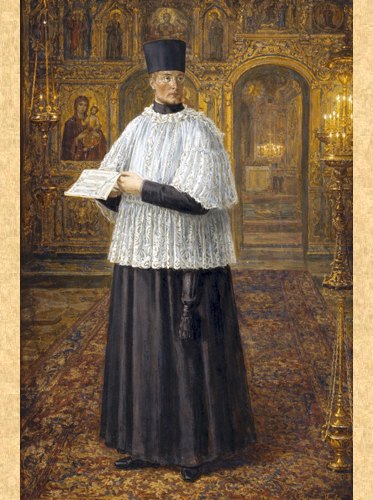
Note on the Use of Headwear by Clergy in the Gallo-Russo-Byzantine and Anglican-Byzantine Usage
ASP 5.6. 2025
In
the principal liturgy of the United Roman-Ruthenian Church
(Gallo-Russo-Byzantine and Anglican-Byzantine), the clergy customarily
wear ecclesiastical head coverings (the mitre for bishops; the biretta,
skufia, or kamilavka for other clergy) throughout much of the service,
removing them at specific and theologically significant moments. This
practice is neither casual nor decorative, but deeply symbolic, based
entirely in the Church’s traditional understanding of priesthood,
office, and sacrifice.
During the preparatory rites and the opening portions of the Divine
Liturgy, the priest or bishop acts not primarily as a private
individual, but in persona Christi,
standing in the office entrusted to him by the Church. The head
covering serves as a visible sign that it is the office, not the
personality, that leads the people in worship. The clergy do not come
forward as themselves, but as those who have been set apart and clothed
with an authority not their own. In this sense, the head covering
underscores that the liturgy is a corporate, ecclesial act, not a
personal performance or devotion.
When the celebrant approaches the altar after the preparatory rites,
bowing, kissing the altar, and performing the lavabo, the head covering
is removed briefly (retaining the zucchetto), marking a moment of
personal reverence before the holy place. It is again removed at the
proclamation of the Gospel (also retaining the zucchetto), in humility
before the living Word of Christ. Most significantly, both the head
covering and the zucchetto are both
removed at the Preface and remain so throughout the Eucharistic portion
of the Liturgy, when the celebrant stands bareheaded before the Mystery
of the Sacrifice itself. At this moment, all symbols of office yield to
awe before the Real Presence of Christ.
The theological basis of this practice is twofold. First, the priest or
bishop offers not his private self, but his office and ministry, in
obedience to Christ and the Church. Second, in offering that office, he
is no longer acting as his own man, but as one who has been given over
entirely to sacred service. The clergy who assist likewise participate
in this same ministry, not independently, but as extensions of the one
priestly action of the Church.
This custom also reflects the broader Eastern Christian instinct for
symbolic clarity rather than constant gesture. Rather than frequent and
sometimes distracting changes of posture or attire, the URRC preserves
a stable ceremonial language in which changes occur only at moments of
real theological weight. In this way, the faithful are invited not to
watch the clergy, but to enter more deeply into the mystery being
enacted. Thus, the use of ecclesiastical head coverings in the URRC
liturgy is a clear expression of tradition, bearing witness to the
truth that in the Divine Liturgy, the Church does not gather around
personalities, but around Christ Himself, offered once for all and made
present again for the life of the world.
Sign of the Cross
In this rite, with heritage both eastern and western, individuals may cross themselves right to left (more traditional, being the way Christendom in general made the sign throughout the early church) or left to right. It is a matter of personal faith rather than rigid formulism.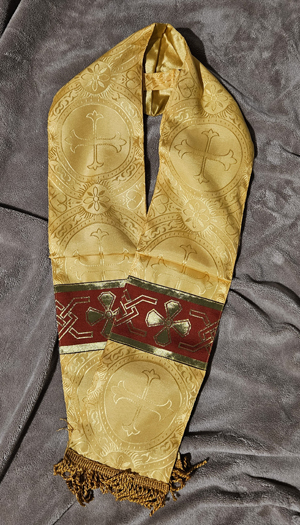
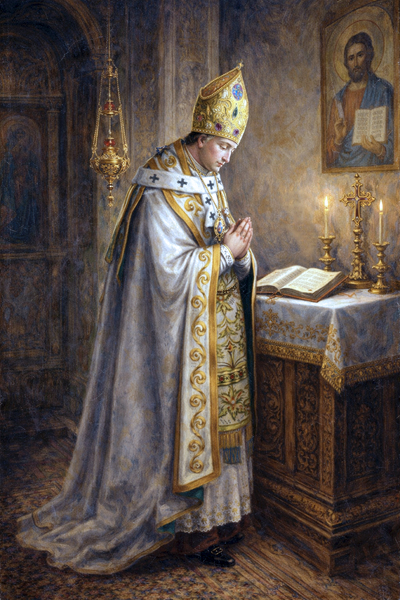
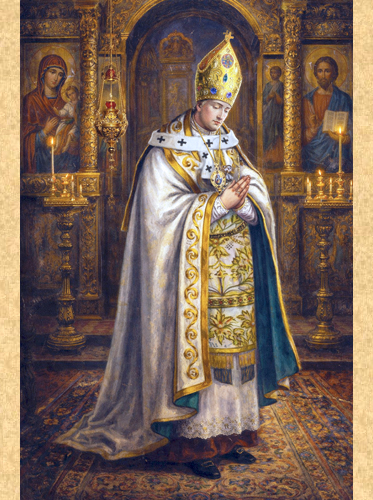
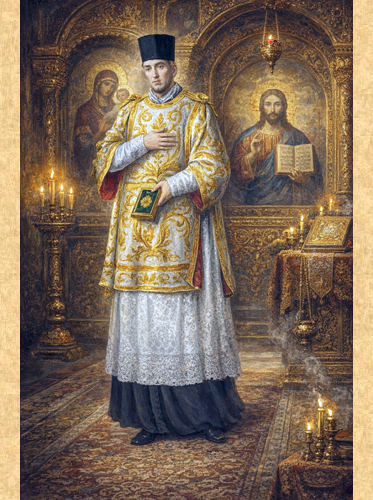
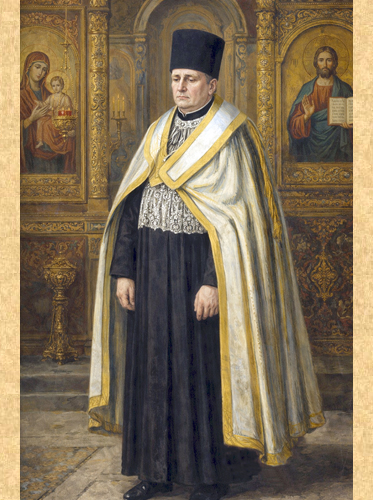
Vesture
Clergy in Choir and Servers: Cassock and surplice. Most formally, clergy serving in their mass vestments over surplice, other servers in tunicle over the surplice.| Advent (Sundays & Feriae) | Purple | |
| Rose Week of Advent (Sunday & Feriae) | Rose or Purple | |
| Feast of the Nativity until Vigil of the Epiphany exclusive | Red | |
| Epiphany until Septuagesima | Gold or White | |
| Septuagesimatide (Sundays & Feriae) | Purple | |
| Lent (Sundays) | Purple | |
| Lent (Feriae) | Black or Purple | |
| Lent (Rose Week, Sundays & Feriae) | Rose or Purple | |
| Palm Sunday | Green | |
| Holy Thursday | Gold or White | |
| Holy Saturday | Gold or White | |
| Easter Vigil | Red | |
| Easter Sunday, Monday, and Tuesday (until Vespers) | Red | |
| From Vespers Easter Tuesday through the Vigil of Pentecost | Gold or White | |
| Vigil of Pentecost | Red | |
| From Pentecost Sunday until Advent (Sundays & Feriae) | Green | |
| Feasts of Our Lord | Gold or White | |
| Feasts of the Holy Cross | Green | |
| Feasts of Our Lady | Blue or White | |
| Feasts of Confessors and Doctors of the Church | White or Gold | |
| Feasts of Martyrs | Red | |
| Liturgy of the Dead | Black or Purple | |
| Ember Days (in Trinity Season) | Purple | |
| Ember Days of Pentecost Week | Green | |
| Ember Days of Lent | Black or Purple | |
| Ember Days of Advent | Purple |
The Order of Worship
Follow the Divine Liturgy from the Asperges and prayers before the altar through the Canon, Communion, and final blessing.
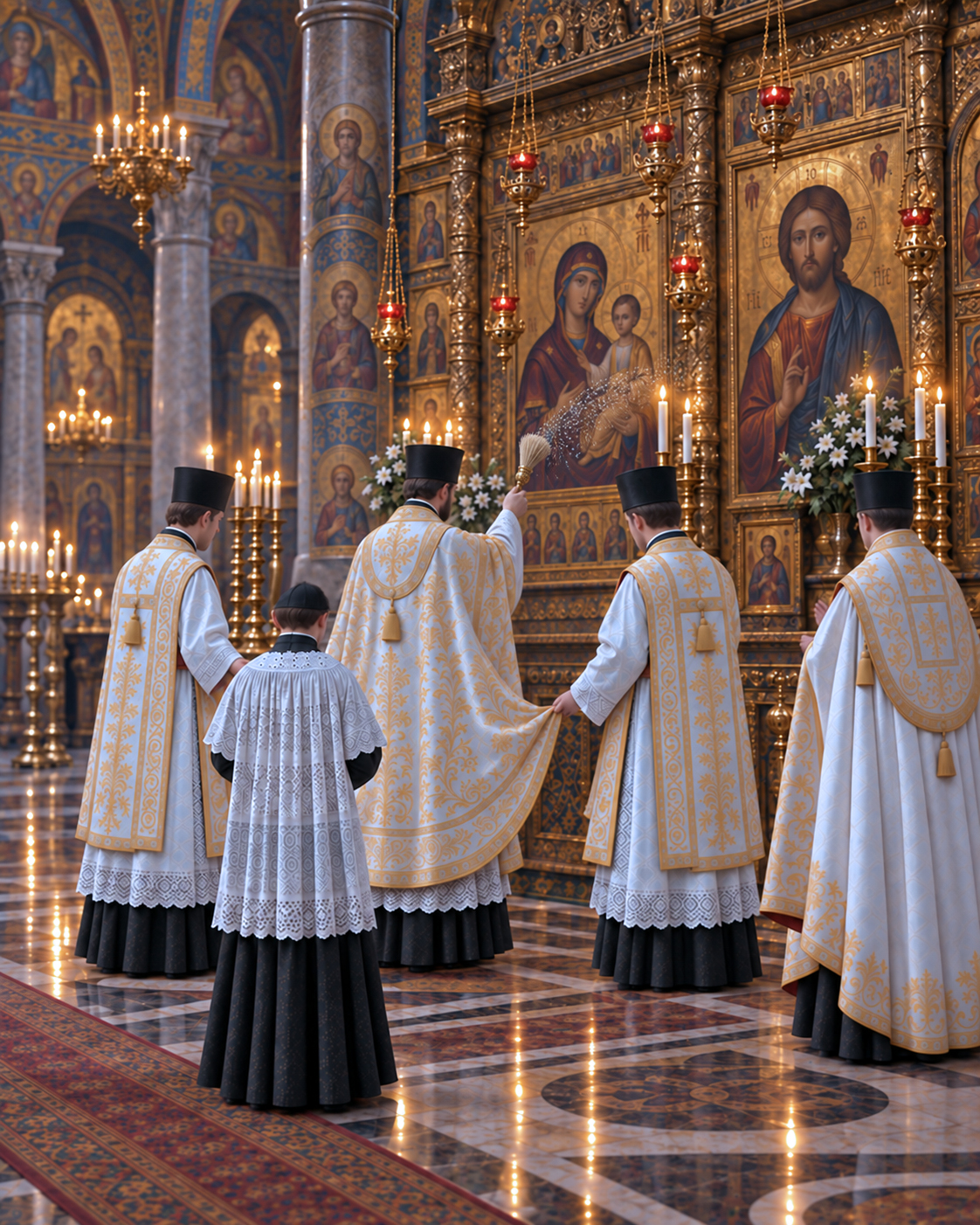
The ministers having processed or entered the sanctuary, the priest, vested in cope, intones the Asperges, which is continued by the choir. All remain standing. The priest and ministers continue reciting the remainder of what is below. Then the priest accepts the aspergillum and asperses the altar thrice. Aspersing himself, he then asperses the Deacon and Sub-Deacon. The priest proceeds with the Deacon on his right and the Sub-Deacon on his left to asperse any clergy in choir, and then the servers. They then proceed through the church to asperse the people. When the choir reaches the Gloria Patri, they stop and bow for the first verse, and then continue. Bishops likewise perform the asperges in mass vestments.
THOU shalt sprinkle me, O Lord, with hyssop, and I shall be cleansed; Thou shalt wash me, and I shall become whiter than snow. Ps. Have mercy on me, O God, according to thy great mercy. V. Glory be. Thou shalt sprinkle…etc.
V. Show us thy mercy, O Lord.
R. And grant us thy salvation.
V. O Lord, hear my prayer.
R. And let my cry come before thee.
V. The Lord be with you.
R. And with thy spirit.
Let us pray.
Priest: Hear us, O holy Lord, almighty Father, everlasting God, and vouchsafe to send thy holy Angel from heaven, to guard, cherish, protect, visit and defend all that are assembled in this place: through Christ our Lord. Amen.
From Easter to Pentecost
From Easter Sunday through Saturday of Whitsunweek inclusive, the Asperges is replaced with the Vidi Aquam. The procedures remain the same as for the Asperges ritual.
I SAW water flowing from the right side of the temple, alleluia; and all they to whom that water came were saved; and they shall say: alleluia, alleluia. Ps. Praise the Lord, because he is good; because his mercy endureth forever. V. Glory be. I saw…etc.
Then follows Hear us as above with Alleluia.
Deacon: Master, bless.
Priest: Blessed is our God, always, now and ever, and to the ages of ages.
Deacon: Amen.
Deacon (or priest, if celebrating alone):
Glory to Thee, our God, glory to Thee.
O Heavenly King, Comforter, Spirit of Truth,
Who
are everywhere present and fill all things,
Treasury of Blessings and Giver of Life,
come and dwell within us, cleanse us of all
stain, and save our
souls, O Holy One.
The
following line is said
three times:
Holy God, Holy
Mighty,
Holy Immortal, have mercy on us.
Here bow.
Glory be to the Father, and to the Son, and to the Holy Spirit...
as it was in the beginning, is now and ever shall be, unto the ages of ages. Amen.
O Most Holy Trinity, have mercy on us;
O Lord, cleanse us of our sins;
O Master, forgive our transgressions;
O Holy One, visit us and heal our infirmities for Thy Name's sake.
Lord, have mercy.
Christ, have mercy.
Lord, have mercy.
Glory be to the Father, and to the Son, and to the Holy Spirit...
as it was in the beginning, is now and ever shall be, unto the ages of ages. Amen.
Our
Father, Who art in heaven, hallowed be Thy Name;
Thy kingdom come, Thy will be done on earth as it is in heaven. Give us this day our daily
bread, And forgive
us our trespasses, as
we forgive those who trespass against us; And
lead us not into temptation, but
deliver
us from evil.
Priest: For Thine is the kingdom, and the power, and the glory, Father, Son, + and Holy Spirit, now and ever, and to the ages of ages.
Deacon: Amen.
The priest and deacon then say:
Have mercy on us, O Lord, have mercy on us: since we have no defense, we sinners offer this supplication to Thee, O Master; have mercy on us.
Glory be to the Father, and to the Son, and to the Holy Spirit.
Lord, have mercy on us, for in Thee we place our hope. Be not exceedingly angry with us nor mindful of our transgressions; but look upon us even now with mercy and deliver us from our enemies; for Thou art our God and we are Thy people: we all are the work of Thy hands, and we call upon Thy Name. Now and ever, and to the ages of ages. Amen.
Open to us the gates of mercy, O blessed Mother of God, that we, who place our hope in thee, may not perish, but that through thee we may be delivered from misfortune; for thou art the salvation of all Christians.
Then bowing towards the crucifix or icon of Christ, they say:
We fall down and worship before thy most pure image, O Holy and Good One, begging forgiveness for our offenses, O Christ our God; for Thou, of Thine own will, were pleased to ascend upon the cross in the flesh to deliver those whom Thou have created from the slavery of the enemy. Therefore, we gratefully cry out to Thee: by Thy coming to save the world, O our Savior, Thou have filled all things with joy.
They then bow towards the image or icon of the Mother of God and say the following:
O Holy Mother of God, fount of mercy, make us worthy of compassion. Look upon a sinful people; as always, show thy power; for, placing our hope in thee, we cry out to thee, “Rejoice!” as did once Gabriel, the commander of the bodiless Hosts.
The priest then bows his head and says this prayer:
Priest: O Lord, stretch forth Thy hand from Thy holy place on high, and strengthen me for this, Thine appointed service, that, standing uncondemned before Thy fearsome Altar, I may celebrate the Holy and unbloody Sacrifice. For Thine is the power and the glory unto the ages of ages. Amen.
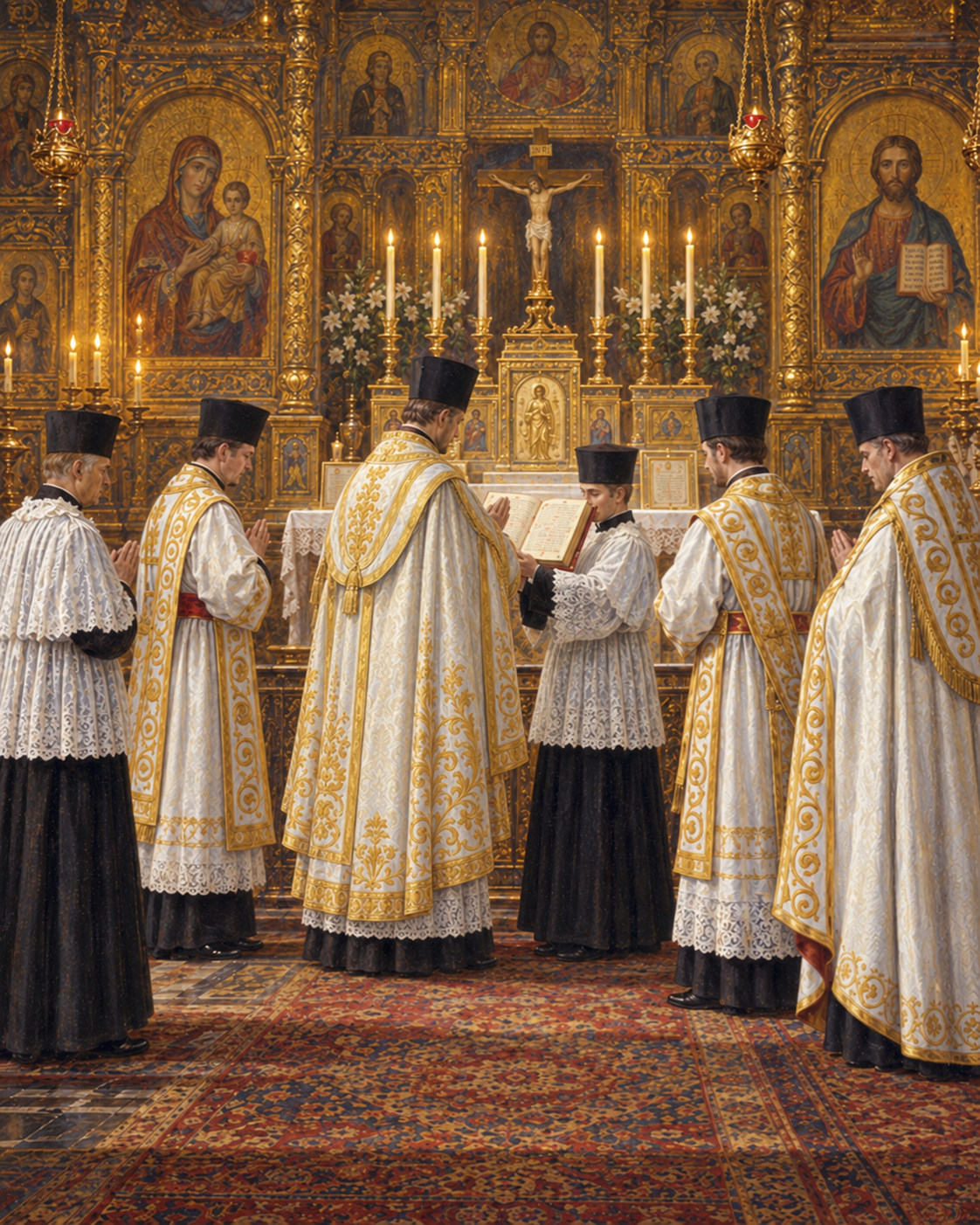
The priest and deacon then bow to the choirs on either side and then go into the Altar, but before doing so, they say the following:
I will come into Thy house,
I will bow towards Thy holy temple in fear of Thee. Lead me, O Lord, in Thy righteousness; because mine enemies direct my way in Thy sight.
For in their mouths there is no truth; their heart is vain, their throat is an open sepulchre; they dealt deceitfully with their tongues.
Judge them, O God, and let them fall by their own counsels; according to the multitude of their wickedness cast them out, for they provoked Thee, O Lord.
And let all them be glad that hope in Thee, they shall rejoice forever, and Thou wilt dwell in them; and all they that love Thy Name shall glory in Thee.
For Thou wilt bless the righteous, O Lord:
Thou hast crowned us with a shield of Thy good will.
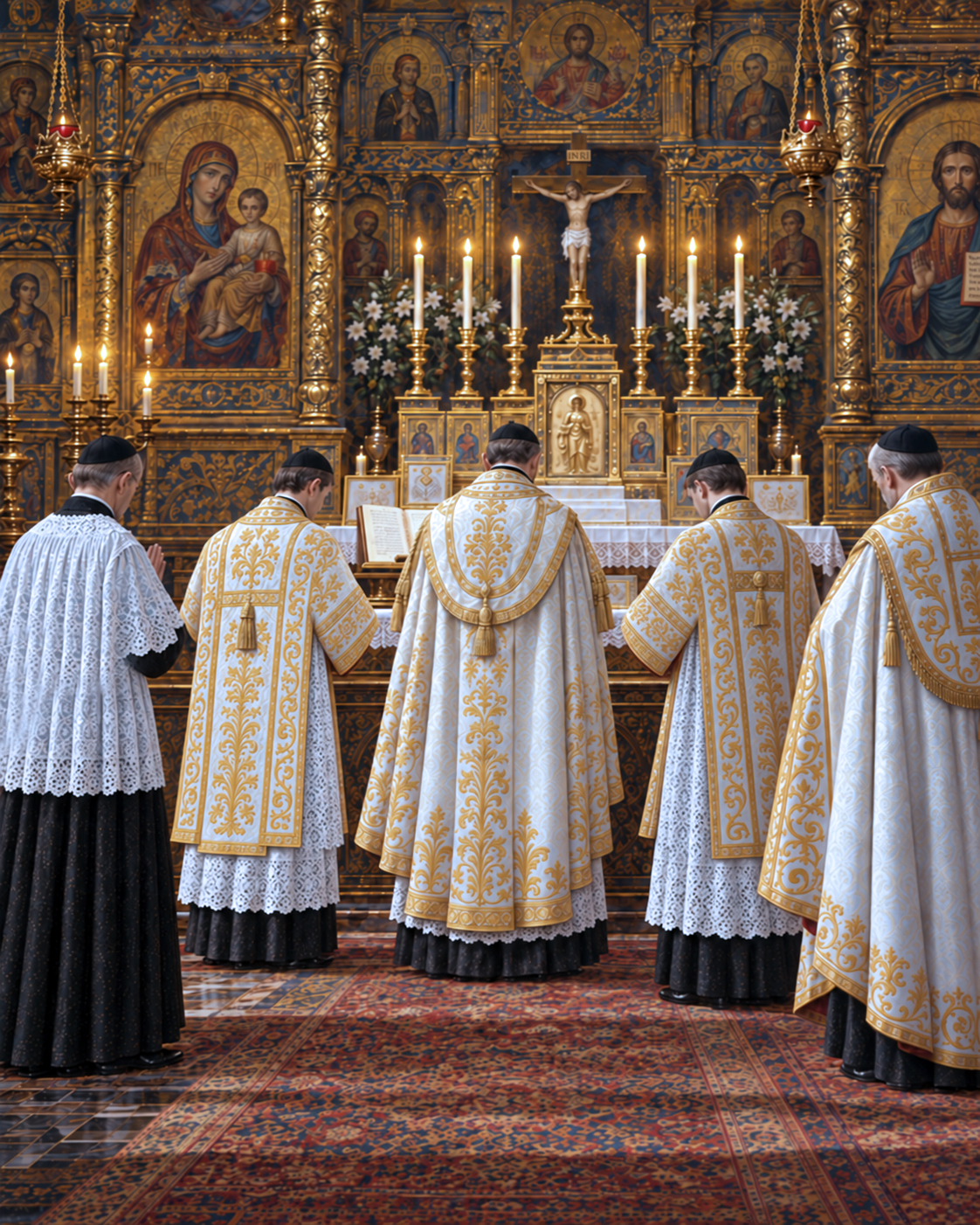
Having ascending the altar they make three small bows before the Holy Table. The priest kisses the altar in the centre, and he standing to the right, the deacon comes to kiss the Holy Table in the centre. If there is a sub-deacon, the deacon steps to the left, and the sub-deacon kisses the altar.
Priest
and Deacon (and Sub-Deacon):
O God, be merciful to me a sinner.
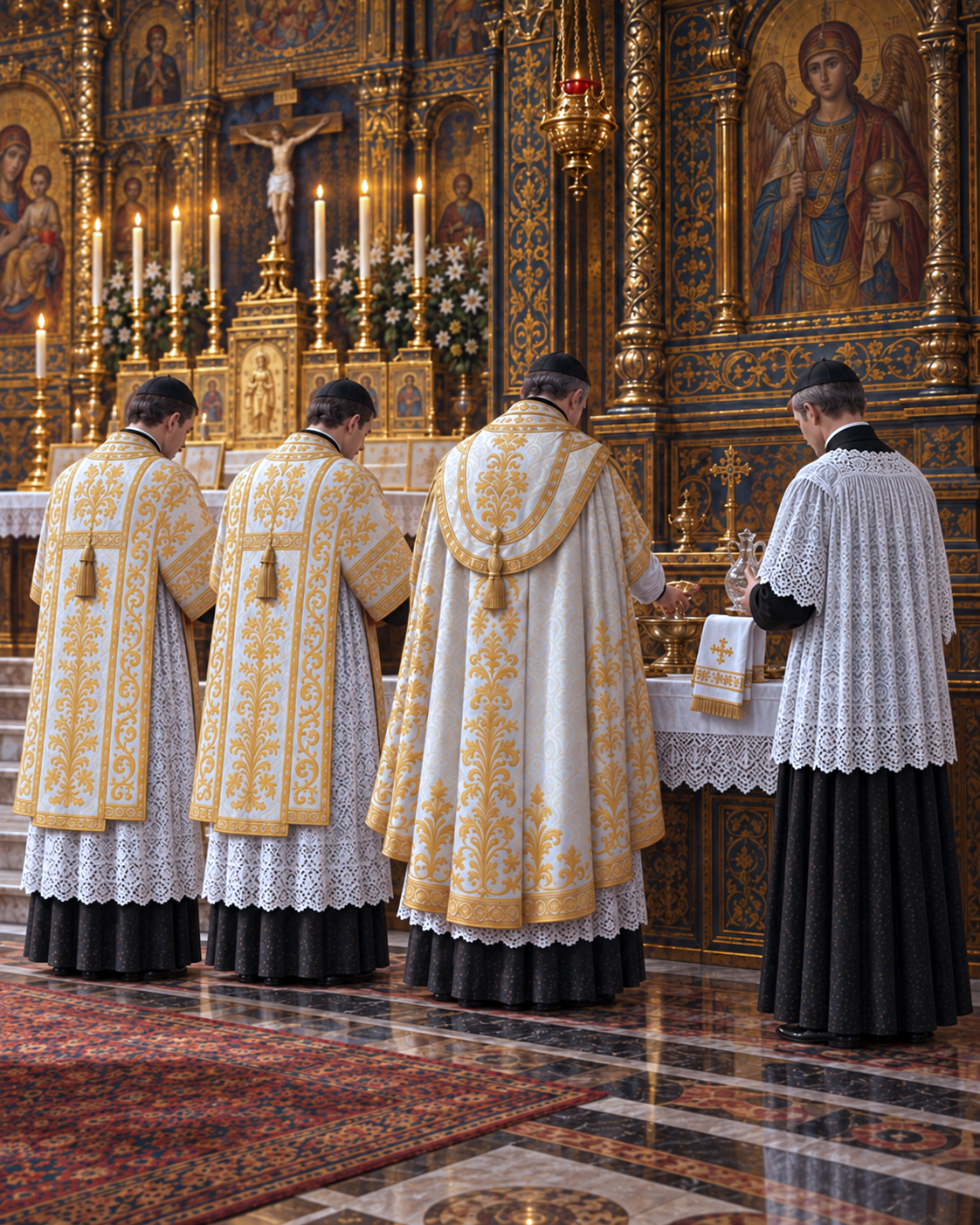
The priest, deacon, and sub-deacon go to the credenza and wash there hands in order, assisted by the server, saying:
Priest, Deacon, and Sub-Deacon:
I will wash my hands among the innocent, and I will go around Thy altar, O Lord, that I may hear the voice of Thy praise, and recount all Thy wonderful works. O Lord, I have loved the beauty of Thy house and the place where Thy glory dwells.
Destroy not my soul together with the ungodly, nor my life with men of blood, in whose hands are iniquities; their right hand is full of bribes.
But as for me, I walked in my innocence, redeem me,
O Lord, and have mercy on me. My
foot stood
on an even place, O Lord; in
the congregations
I will bless Thee.
Note in Case Intinction will be used.
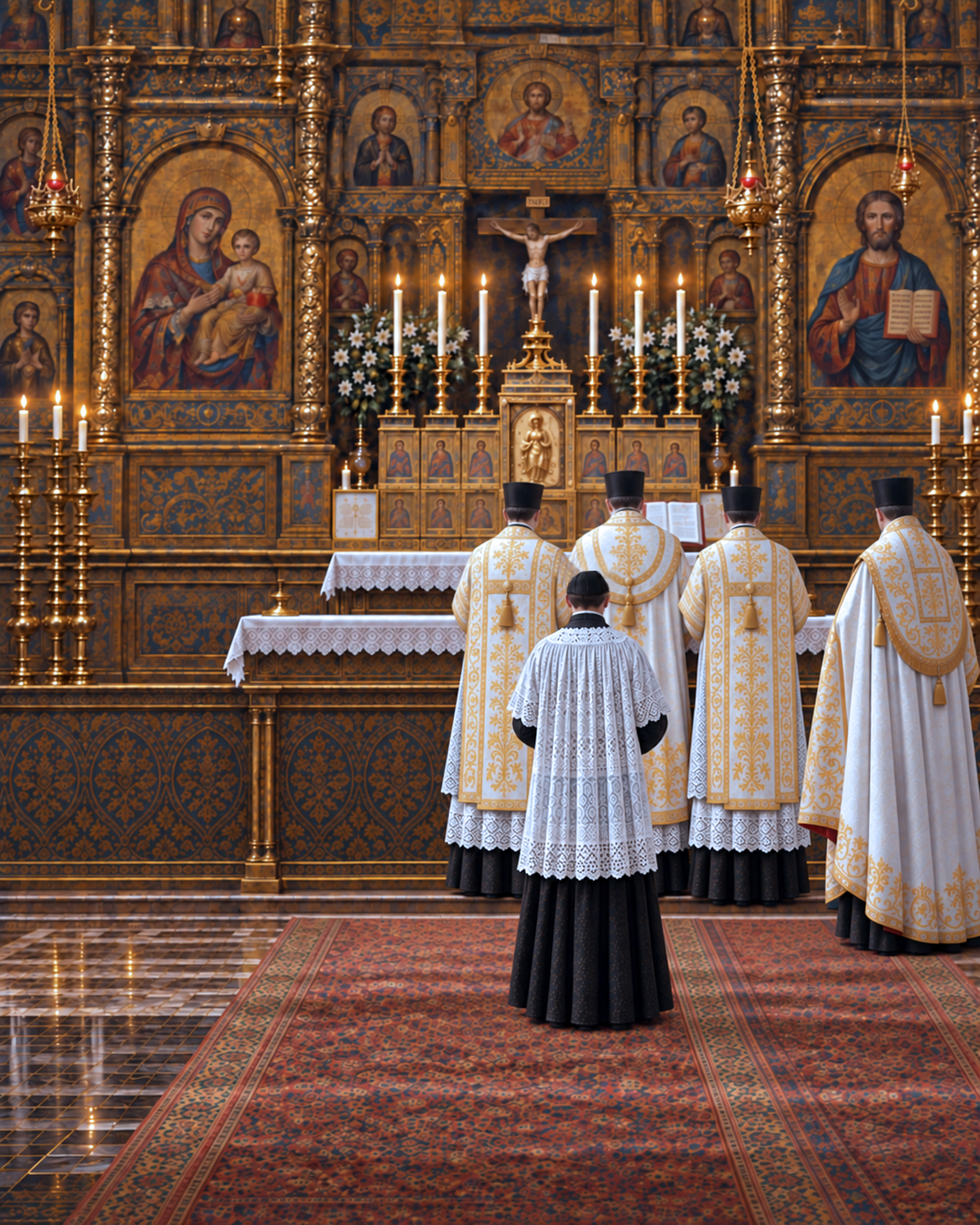
Then standing at the Epistle (south) side of the front of the altar, with the deacon to the right and the sub-deacon to the left, the liturgy continues:
Priest (with hands joined): O God, be merciful to me a sinner. Thou hast redeemed us from the curse of the Law by Thy precious Blood; nailed to the Cross, and pierced with a spear, Thou didst pour forth immortality to all mankind. O our Savior, glory to Thee.
Deacon: Master, bless. (here and in other places, this is omitted if a priest is celebrating alone)
Priest: Blessed be our God, always, now and forever, and unto the ages of ages.
Deacon: Amen.
Priest: In remembrance of our Lord, God, and Savior, Jesus Christ. (Said three times)
Like a sheep led to the slaughter. And like a lamb without blemish, that before its shearer is dumb, so He opened not His mouth. In His humiliation judgment of Him was taken away.
Who shall declare His generation? For His life is taken away from the earth.
The Lamb of God, Who taketh away the sin of the world, is sacrificed for the life and salvation of the world.
One of the soldiers pierced His side with a spear, and at once there came out blood and water. He who saw it has borne witness—his testimony is true.
Commemoration of the Saints
Priest: In honor and memory of our most blessed Lady, the Mother of God and ever‐Virgin Mary: through whose prayers, O Lord, accept this sacrifice upon Thy most heavenly Altar. The Queen stood at Thy right hand, vested in robes woven with gold, adorned in many colors.
The honorable, heavenly and bodiless Hosts.
The honorable and glorious Prophet, Forerunner and Baptist, John, and all the holy prophets.
The holy, glorious and all‐praised Apostles and martyrs, Peter and Paul, Andrew, James, John, Thomas, James, Philip, Bartholomew, Matthew, Simon, and Thaddeus; Linus, Cletus, Clement, Xystus, Cornelius, Cyprian, Lawrence, Chrysogonus, John and Paul;
Our holy Fathers among the Saints, the Hierarchs: Gregory the Great, Basil the Great, Gregory the Theologian, and John Chrysostom; Athanasius and Cyril; Nicholas of Myra; the teachers of the Slavs, Cyril and Methodius, the holy Bishop‐Martyr Theodore of Mukachevo, Bishop-Martyr Josaphat of Polotsk, and all holy Hierarchs, as well as Alexander, Marcellinus, Peter, Felicitas, Perpetua, Agatha, Lucia, Agnes, Cecilia, Anastasia;
The holy Apostle, First‐Martyr and Archdeacon Stephen, the holy Great‐Martyrs:
Demetrius, George, Theodore the Recruit, and all the holy Martyrs.
Our venerable and God‐bearing Fathers: Anthony, Euthymius, Sabbas, Onuphrius, and all venerable men and women.
The holy Wonder‐Workers, the Unmercenaries: Cosmas and Damian, Cyrus and John, Pantaleimon and Hermolaus, and all the holy Unmercenaries.
The holy and righteous Ancestors of God, Joachim and Anna.
And in memory of Saint N. (the Saint of the temple), of Saint N. (the Saint of the day), and of all thy Saints; by whose merits and prayers grant thou that in all things we may be defended with the help of Thy protection.
Commemoration of the Church
Priest: Remember, O Master, Lover of Mankind, our holy universal pontiff N., Papa-Catholicos of Rome-Ruthenia, our most reverend Archbishop and Metropolitan N., our God‐loving Bishop N., (and in the case of any of these bishops themselves, they omit those of lower grade and say themselves “and me, Thine unworthy servant.”) and the entire episcopate of the Holy, Orthodox, Catholic, and Apostolic Faith, the honorable priesthood, the diaconate in Christ, and all others in Holy clerical orders;
(If in a monastery, then also add the following after the mention of the bishop: our Abbot (or other office), N.) and all our brethren whom Thou, in Thy compassion, have called to communion with Thee, O all‐good Master.
Commemoration of the Faithful
Priest: Remember, O Lord, N.
Deacon: For our divinely‐protected Emperor N., or King N., and all our armed forces, let us pray to the Lord. (or else: For our civil authorities.) and all our armed forces, let us pray to the Lord.
People: Lord, have mercy.
Deacon: For this city (or: for this village, or: for this holy monastery), for every city, countryside, and for the faithful living therein, let us pray to the Lord.
People: Lord, have mercy.
Deacon: For favorable weather, for an abundance of the fruits of the earth, and for peaceful times, let us pray to the Lord.
People: Lord, have mercy.
Deacon: For those who travel by sea, air, and land, for the sick, the suffering, the captive, and for their safety and salvation, let us pray to the Lord.
People: Lord, have mercy.
Deacon: That we be delivered from all affliction, wrath, and need, let us pray to the Lord.
People: Lord, have mercy.
Deacon: Help us, save us, have mercy on us, and protect us, O God, by Your grace.
People: Lord, have mercy.
Deacon: Remembering our most holy, most pure, most blessed and glorious Lady, the Mother of God and ever‐Virgin Mary, with all the Saints, let us commend ourselves and one another, and our whole life, to Christ God.
People: To Thee, O Lord.
Priest:
O Lord our God, Whose might is
incomparable, Whose
glory is incomprehensible, Whose
mercy is immeasurable, and
Whose love for man ineffable: from the tenderness
of Thy heart look down upon us, O Master,
and upon this holy temple.
Bestow upon us and upon those who pray
with us the abundance of Thy tender mercy and Thy compassion.
For unto Thee belongs all glory and honor and worship, Father, Son, and Holy Spirit, now and ever, and to the ages of ages.
People: Amen.
Commemoration of the Dead
Priest: Remember, O Lord, the soul of Thy servant, N. who has fallen asleep.
Deacon: And of all our Holy, Orthodox, Catholic, and Apostolic fathers and brethren who have fallen asleep in the hope of resurrection, eternal life, and communion with Thee, O Lord, Lover of Mankind.
People: Lord, have mercy.
Deacon: For those buried here and those inscribed here, and for all Orthodox and Catholic Christians everywhere, and for their blessed repose, let us pray to the Lord.
People: Lord, have mercy.
Deacon: That they may stand uncondemned before the fearsome judgment‐seat of Christ, and that their souls be committed to the place of light and life where all the Saints and righteous repose, let us pray to the Lord.
People: Lord, have mercy.
Presentation of the Gifts
Priest: Remember also, O Lord, my unworthiness, and, according to Thy great mercy, forgive me my every transgression, voluntary and involuntary.
The priest remaining at the Epistle corner, the Deacon and Sub-Deacon go to the credenza and bring the veiled gifts to the altar. The Deacon lays out the corporal, and then the gifts are placed. The ciborium is placed behind the chalice. The cruets are placed with the wine on the Epistle side, water on the Gospel side, just off the corporal.
People: Lord, have mercy.
The priest says the Prayer of the Offertory after the Holy Gifts have been set on the altar:
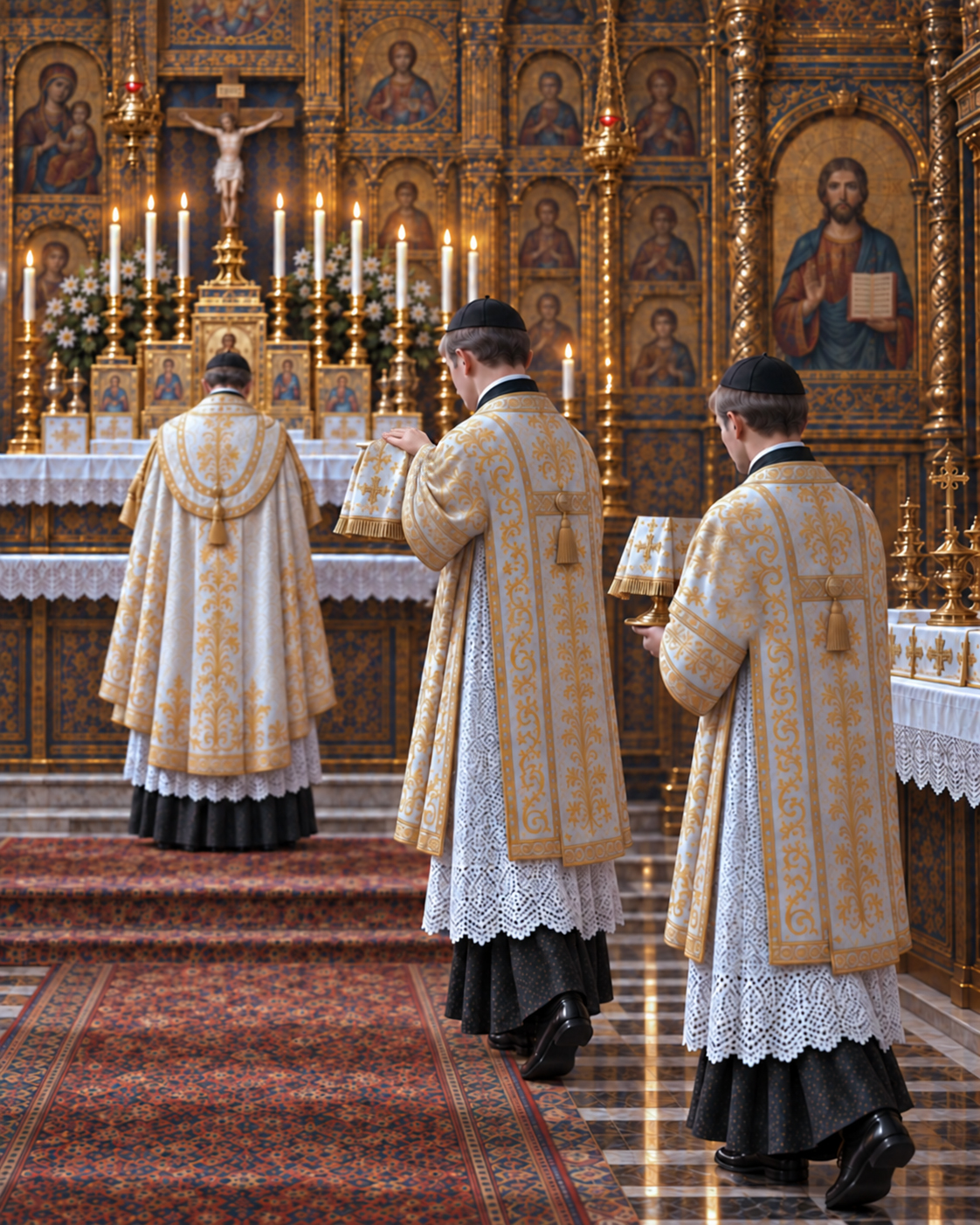
Priest: O Lord God Almighty, Who alone are holy and Who receive the sacrifice of praise from those who call upon Thee with their whole heart, accept also the prayer of us sinners: draw us to Thy holy Altar, enable us to offer to Thee these Gifts and spiritual sacrifices for our sins, and for the ignorances of the people. Count us worthy to find favor in Thy sight, that our sacrifice may be pleasing to Thee, and that the good Spirit of Thy grace may rest upon us, now and forever, and unto the ages.
Censing the Altar
The deacon then takes the censer and, putting incense into it, says to the priest:
Deacon: Master, bless the incense.
And immediately he adds:
Deacon: Let us pray to the Lord.
And the priest says the Prayer of Incense:
Priest: We offer incense to Thee, O Christ, our God, as a pleasing fragrance that, having received it on Thy most heavenly Altar, Thou mayest send down upon us in return the grace of Thy most Holy Spirit.
Deacon: Let us pray to the Lord.
Here the priest, with the deacon on his right and the sub-deacon on his left, censes the altar in the usual manner.
Standing in the centre, he continues:
Priest: O God, our God, Who sent forth the heavenly Bread, as food for all the world our Lord and God, Jesus Christ, the Savior and Redeemer and Benefactor, to bless and sanctify us: bless these Gifts here set forth before Thee and accept them on Thy most heavenly Altar.
As Thou art good and the Lover of Mankind, remember those who have brought the offerings and those for whom they are being offered; and keep us without condemnation in the holy celebration of Thy divine Mysteries.
For sanctified and glorified is Thy most honorable and majestic Name, Father, Son, and Holy Spirit, now and ever, and unto the ages of ages. Amen.
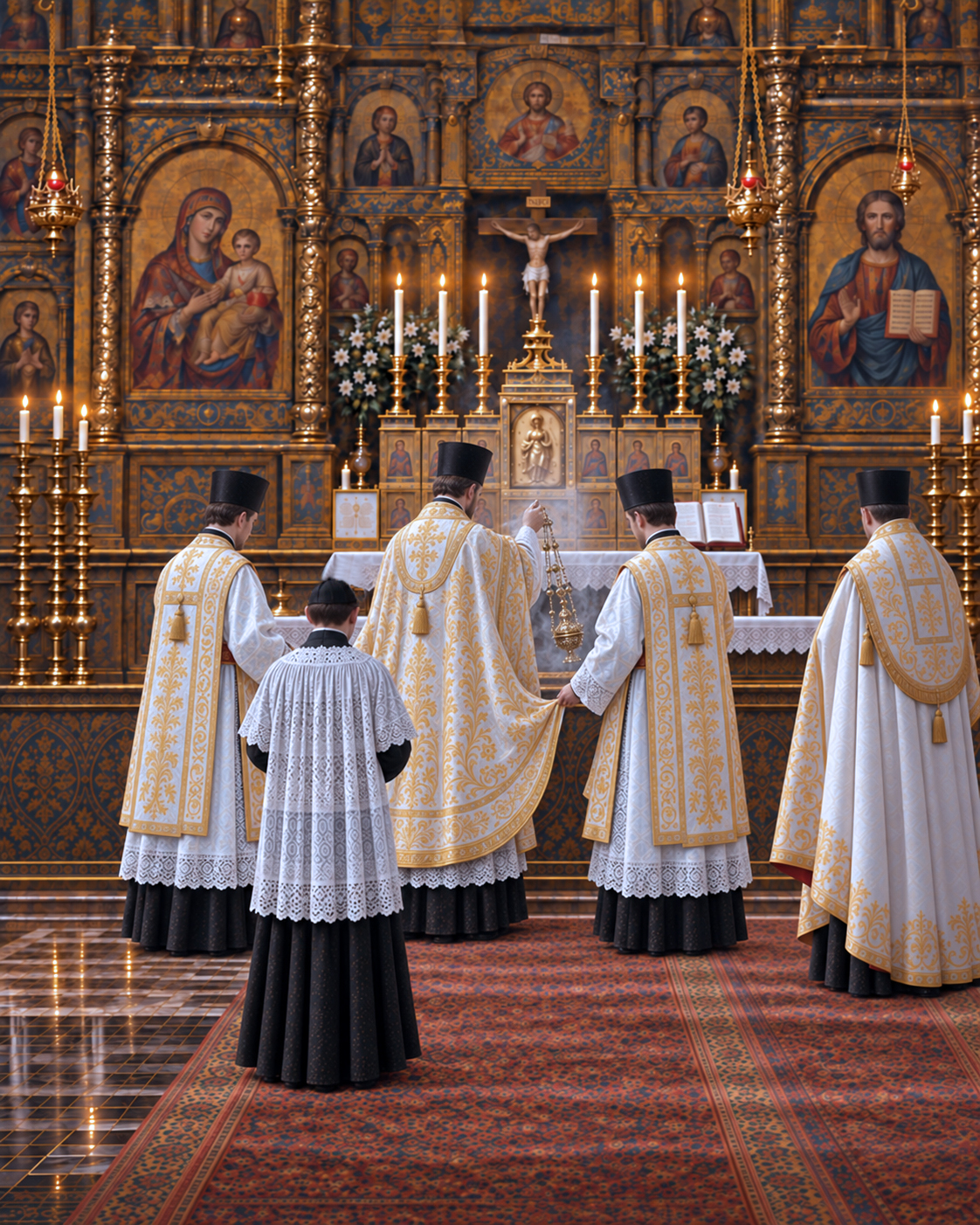
The priest then censes the offerings and the altar again in the usual manner. He then censes the icons and major shrines. Then he walks through the church censing the people. He then gives the censer to the deacon, who gives it to the server and stands to the right of the priest at the epistle corner.
The priest, deacon, and sub-deacon standing at the Epistle corner, here is added an appropriate psalm or hymn (multiple psalms, hymns, or troparia may be added according to the occasion), or else the following:
People: Bless the Lord, O my soul; blessed are You, O Lord.
Bless the Lord, O my soul; and all that is within me, bless His holy Name!
Bless the Lord, O my soul, and forget not all His benefits,
Who forgives all your iniquity, who heals all your diseases,
Who redeems your life from corruption, Who crowneth you with steadfast love and mercy.
The Lord is compassionate and merciful, slow to anger and abounding in mercy.
Bless the Lord, O my soul; and all that is within me, bless His holy Name! Blessed are Thou, O Lord.
Supplications
At the conclusion of the antiphon the deacon moves to the chancel gate, faces the altar, bows, and says:
|
Deacon: |
Again and again, in peace, let us pray to the Lord. |
|
People: |
Lord, have mercy. |
|
Deacon: |
Help us, save us, have mercy on us, and protect us, O God, by Thy grace. |
|
People: |
Lord, have mercy. |
|
Deacon: |
Remembering our most holy, most pure, most blessed and glorious Lady, the Mother of God and ever‐Virgin Mary, with all the Saints, let us commend ourselves and one another, and our whole life, to Christ God. |
|
People: |
To Thee, O Lord. |
The Deacon returns to the altar
Priest: O Lord, our God, save Thy people and bless
Thine inheritance; preserve
the fullness of Thy Church; sanctify
those who love the beauty of Thy house;
glorify them in return by Thy divine power,
and
do not forsake us who hope in Thee;
Here
bow:
For Thine is the might, and Thine is the kingdom and the power, and the glory, Father, Son, + and Holy Spirit, now and ever, and unto the ages of ages.
People: Amen.
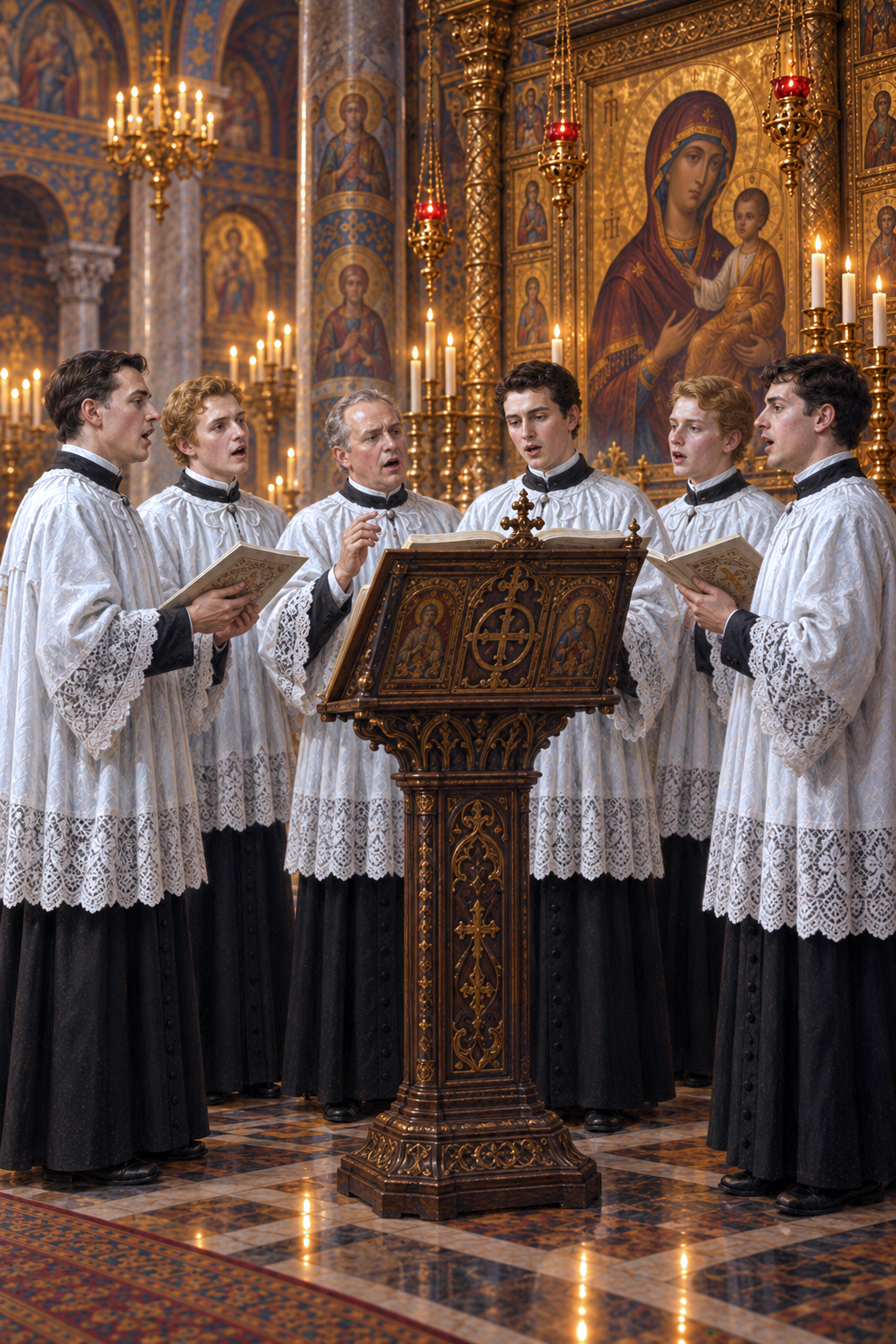
The second psalm as follows or another suitable psalm or hymn (here as well multiple psalms, hymns, or troparia may be added according to the occasion) is said here.
People: Praise the Lord, O my soul! I will praise the Lord as long as I live; I will sing praises to my God while I have being.
Put not your trust in princes, in the sons of men, in whom there is no salvation.
When his breath departs he returns to the earth; on that very day his plans perish.
Blessed is he whose help is the God of Jacob, whose hope is in the Lord his God,
Who made heaven and earth, the sea, and all that is in them; Who keeps faith forever; Who executes justice for the oppressed; who gives food to the hungry.
The Lord sets the prisoners free; the Lord opens the eyes of the blind. The Lord lifts up those who are bowed down; the Lord loves the righteous.
The Lord watches over the sojourners, He upholds the widow and the fatherless; but the way of the wicked He will bring to ruin.
The Lord will reign forever, your God, O Zion, to all generations.
Litany
The deacon, moving to the chancel gate, facing the altar, prays the litany:
|
Deacon: |
Again and again, in peace, let us pray to the Lord. |
|
People: |
Lord, have mercy. |
|
Deacon: |
Help us, save us, have mercy on us, and protect us, O God, by Thy grace. |
|
People: |
Lord, have mercy. |
|
Deacon: |
Remembering our most holy, most pure, most blessed and glorious Lady, the Mother of God and ever‐Virgin Mary, with all the Saints, let us commend ourselves and one another, and our whole life, to Christ God. |
People: To Thee, O Lord.
Priest: Thou, Who promised to grant the petitions of two or three united together in Thy Name, and have given us the grace to offer these prayers with a single and united voice, hear also now the petitions of Thy servants that will be for their benefit, granting us in this present age the knowledge of Thy truth, and in the age to come eternal life.
For Thou art good, O God, and the Lover of Mankind, and to Thee we send up glory, Father, Son, and Holy Spirit, now and ever, and unto the ages of ages.
People: Amen.
Here the deacon may optionally add one or more orations, which may be the liturgical oration of the day, orations from the table of prayers, or other orations as approved by episcopal authority.
The deacon returns to the altar.
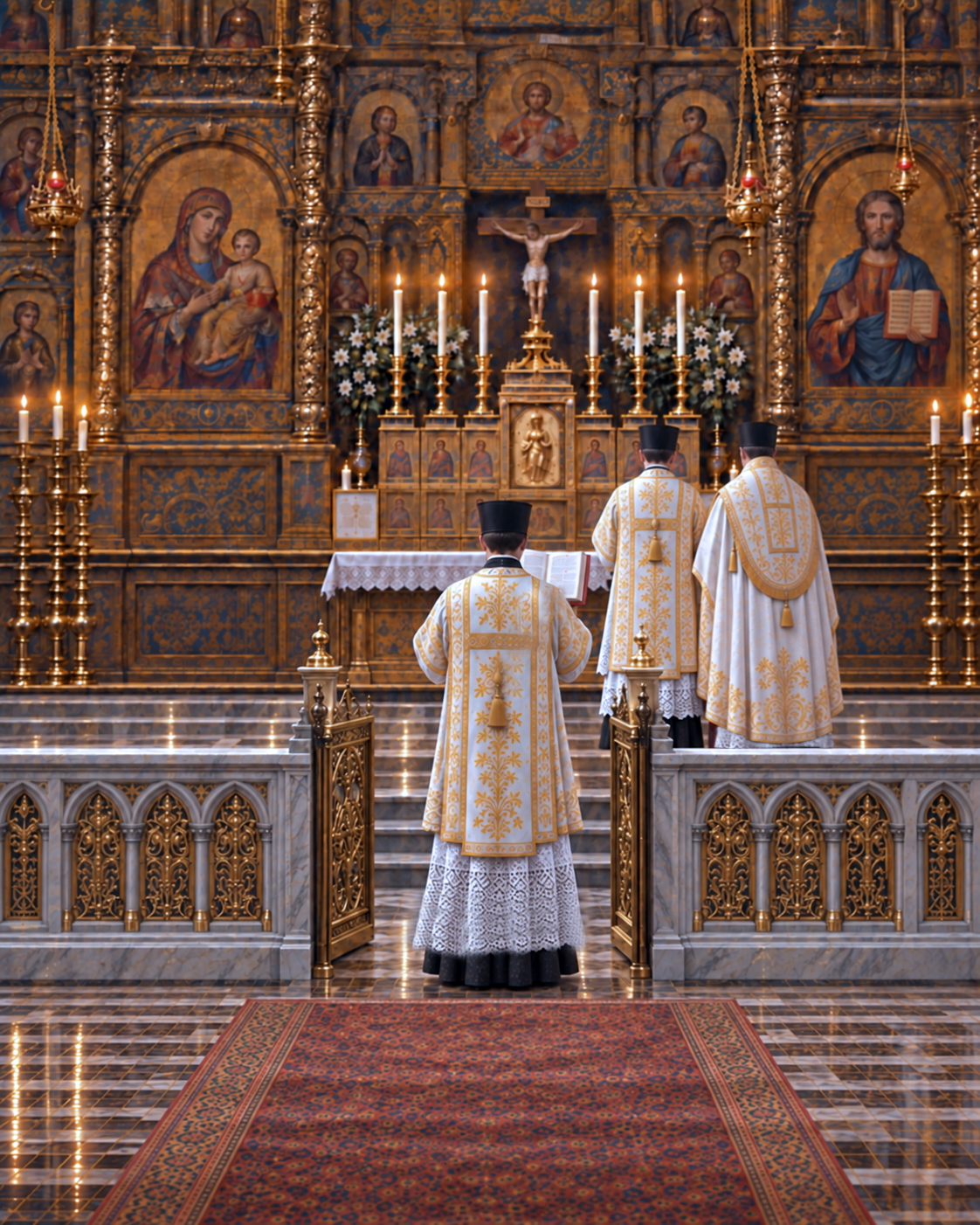
On Sundays and major feast days are added the Beatitudes.
People: In Thy Kingdom, remember us, O Lord, (when Thou comest into Thy kingdom).
Blessed are the poor in Spirit, for theirs is the kingdom of heaven. Blessed are those who mourn, for they shall be comforted. Blessed are the meek for they shall inherit the earth.
Blessed are those who hunger and thirst for righteousness for they shall be filled. Blessed are the merciful, for they shall receive mercy. Blessed are the pure in heart, for they shall see God.
Blessed are the peacemakers, for they shall be called sons of God.
Blessed are those who are persecuted for the sake of righteousness, for theirs is the kingdom of heaven.
Blessed are you when they revile you and persecute you and utter every kind of evil against you because of Me. Rejoice and be glad, for your reward is great in heaven.
HYMN OF THE THRICE HOLY
Standing before the altar, with the deacon to the right and sub-deacon to the left, the priest leads the people in the Sanctus.
People: Holy God, Holy Mighty, Holy Immortal, have mercy on us. (Said three times)
Glory to the Father, and to the Son, and to the Holy Spirit, now and ever, and to the ages of ages. Amen.
Holy Immortal, have mercy on us.
Holy God, Holy Mighty, Holy Immortal, have mercy on us.
Priest: Blessed is He who comes in the Name of the Lord.
Blessed art Thou on the throne of the glory of Thy kingdom, seated upon the Cherubim, always, now and ever, and unto the ages of ages.
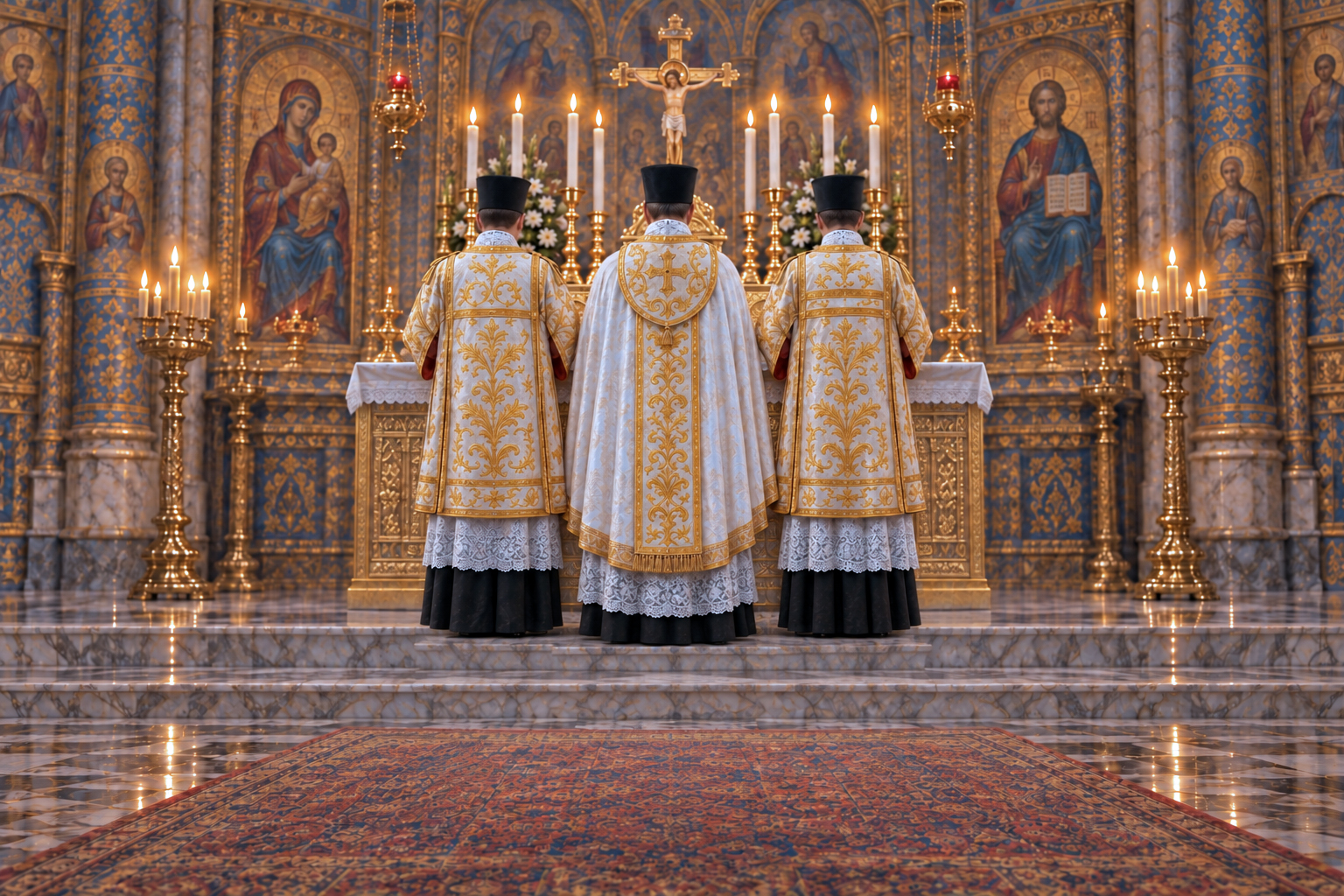
Epistle Lesson
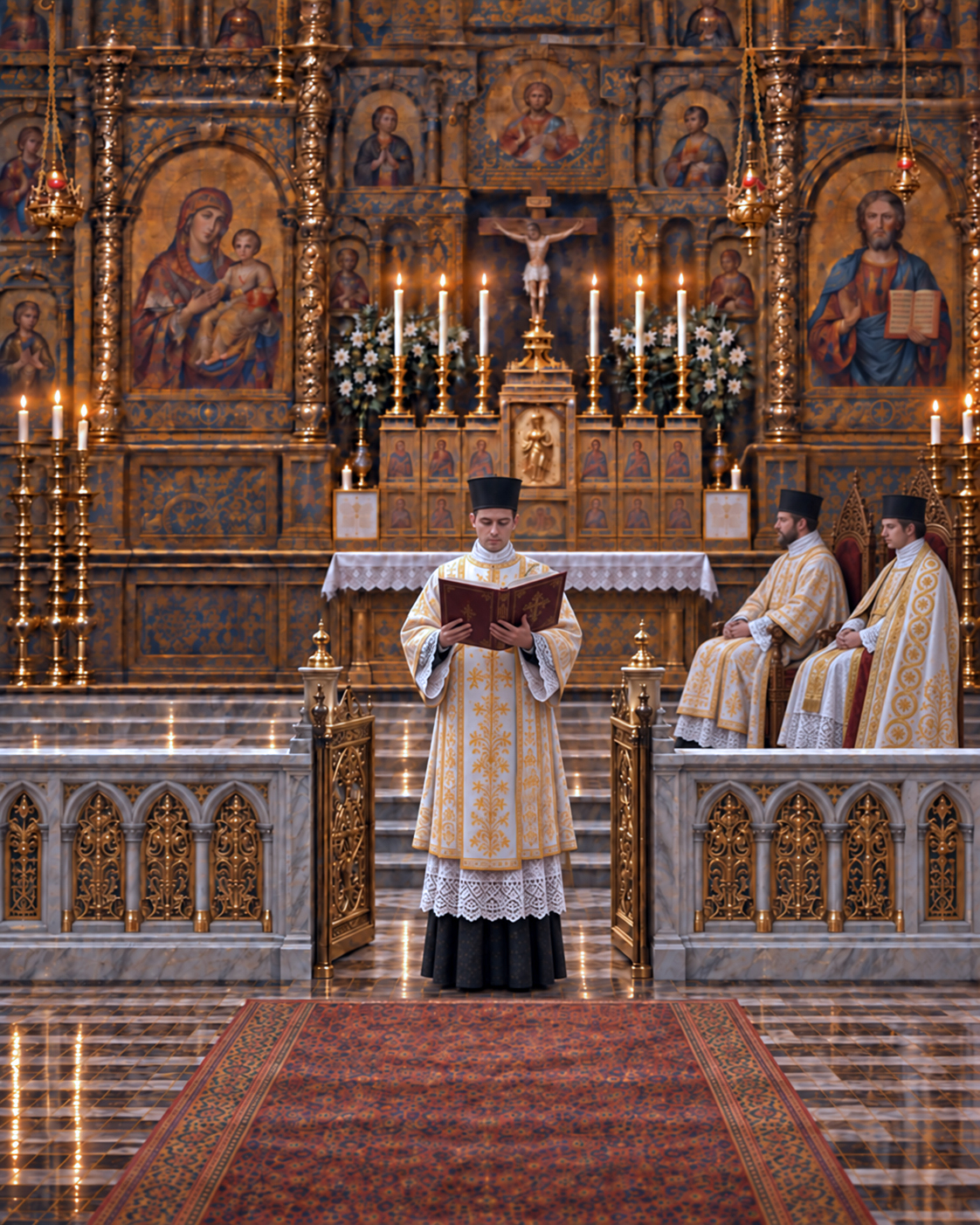
The priest and deacon move to the sedilia and sit for the lesson. The Sub-Deacon moves to the chancel gate and announces the title of the Epistle:
Sub-Deacon or Reader: A reading from the Acts of the Holy Apostles. Or: A reading from the Epistle of N. Or: A reading from the epistle of Saint Paul the Apostle to the Romans, Or: to the Corinthians, Or: to the Galatians.
Deacon: Let us be attentive!
When the Epistle has been read the priest says:
|
Priest: |
Peace be to unto you all. |
|
People: |
And with thy spirit. |
|
Deacon: |
Wisdom! Let us be attentive! |
|
People: |
Alleluia! (with verses) |
However, during penitential liturgy, the Alleluia is replaced with “Let us bless the Lord” here and elsewhere in the liturgy.
During the singing of the Alleluia the deacon takes the censer, puts incense into it, and goes to the priest:
Deacon: Master, bless the incense.
Priest: Blessed is our God, always now and ever, and unto the ages of ages. Amen.
Having received blessing from him, the deacon censes the altar in the usual manner, the priest (at the sedilia) with three single swings, the major icons and images, the choirs, and then the people by moving throughout the nave.
The deacon moves to the center of the altar, bows, and prays:
Priest: O Master, Lover of Mankind, shine forth within our hearts the pure light of Thy divine knowledge. Open the eyes of our mind that we may understand the teachings of Thy Holy Gospel.
Instill in us also the fear of Thy blessed commandments, so that we may lead a spiritual life, both thinking and doing those things which are pleasing to Thee. For Thou, O Christ God, are the enlightenment of our souls and bodies; and to Thee we send up glory, together with the Father, Who is without beginning, and with Thy all‐holy, good, and life‐creating Spirit, now and ever, and to the ages of ages. Amen.
Going to the priest, the Deacon says:
Deacon: Master, bless the proclaimer of the Holy Gospel.
The priest, blessing him, says:
Priest: May God grant that you proclaim the Word with great power, for the fulfillment of the Gospel of His beloved Son, our Lord Jesus Christ.
Deacon: Amen.
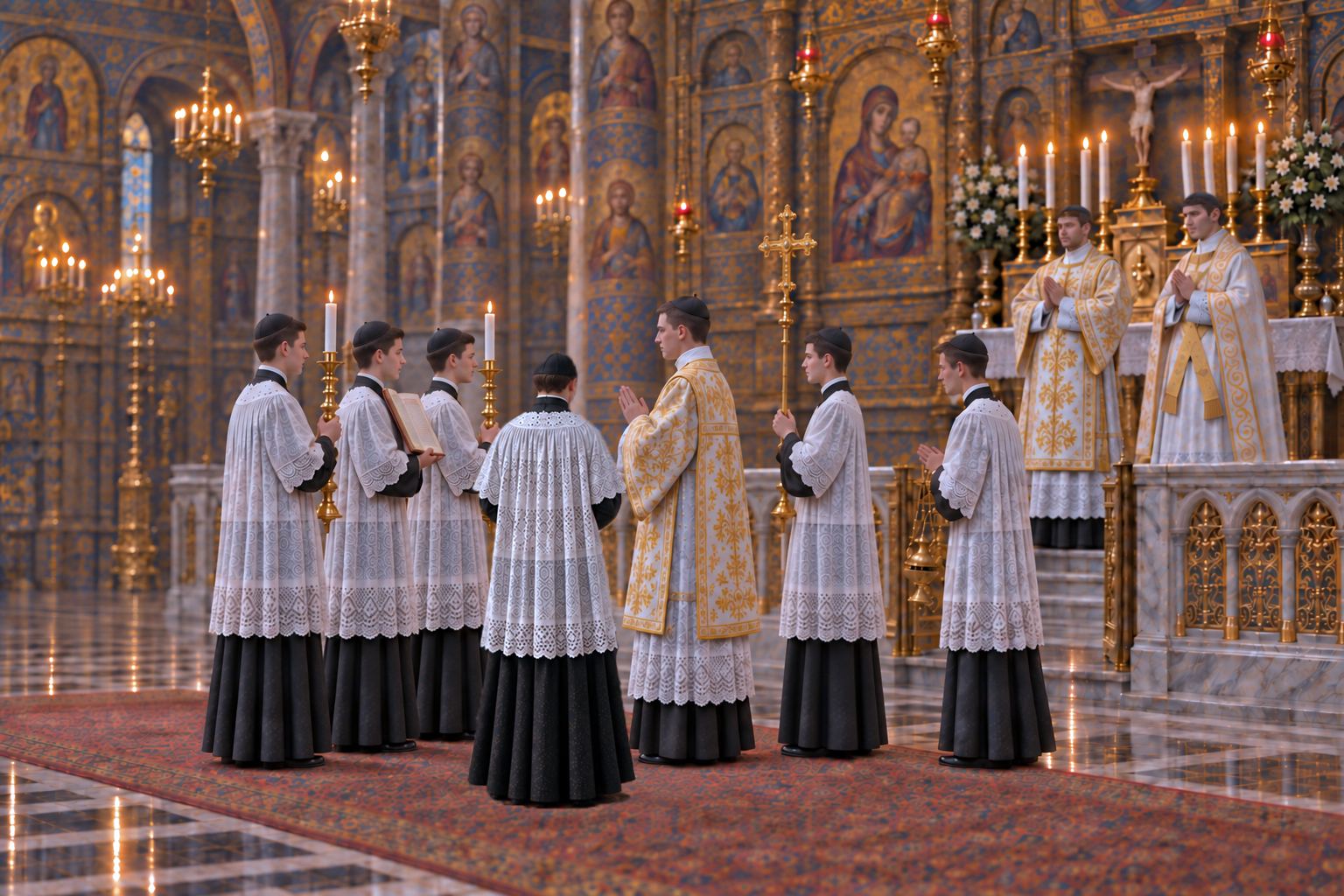
The deacon bows to the holy Gospel Book and takes it from the Gospel side of the altar. He proceeds through the chancel gate, there joined by the candle‐bearers, and continues to the ambo or to the place from which the Gospel lesson is to be proclaimed.
The priest stands before the Holy Table, turns toward the west and intones (if there be a second deacon, he intones instead of the priest; and note that the Bishop stands at the throne holding the crosier, but without the mitre):
Priest: Wisdom! Stand aright and listen to the Holy Gospel.
Peace be to all.
People: And with thy spirit.
Deacon: A reading from the Holy Gospel according to N.
People: Glory unto Thee, O Lord, glory to Thee.
The priest intones the following, (but if there be a second deacon he intones instead of the priest):
Priest: Let us be attentive!
When the Gospel has been read, the priest says:
Priest: Peace be with thee who hast proclaimed the Holy Gospel.
People: Glory unto Thee, O Lord, glory to Thee.
The deacon goes to the altar (or the throne, for a bishop) and hands the closed Gospel Book to the priest, who kisses it and places it on the Gospel side of the altar. In the case of a Bishop, the Deacon himself replaces it to the altar.
The deacon continues:
Deacon: Catechumens, pray to the Lord.
People: Lord, have mercy.
Deacon: Faithful, let us pray for the catechumens: O Lord, have mercy on them.
People: Lord, have mercy.
Deacon: Teach them the word of Truth.
People: Lord, have mercy.
Deacon: Reveal to them the Gospel of righteousness.
People: Lord, have mercy.
Deacon: Make them one with Thy Holy, Catholic, and Apostolic Church.
People: Lord, have mercy.
Deacon: Save them, have mercy on them, help them, and protect them, O God, by Thy grace.
People: Lord, have mercy.
Deacon: Catechumens, bow your heads to the Lord.
People: To Thee, O Lord.
Deacon: All catechumens, depart! Let none of the catechumens remain; all the faithful, again and again, in peace, let us pray to the Lord.
People: Lord, have mercy.
Standing before the altar, the priest prays quietly:
Priest: We give thanks to Thee, O Lord God of Hosts, for having counted us worthy to stand, at this time, before Thy holy Altar and to bow down before Thy compassion for our sins and for the ignorances of the people.
Accept our prayer, O God, and make us worthy to offer to Thee prayers and supplications, and unbloody sacrifices for all Thy people.
Enable us also, whom Thou hast appointed to this Thy service by the power of the Holy Spirit, to call upon Thee at all times and in all places, without blame or condemnation, in pure witness of our conscience, that, hearing us,
You may be merciful to us in the greatness of Thy goodness.
Help us, save us, have mercy on us, and protect us, O God, by Thy grace.
Lord, have mercy.
Priest: For unto Thee belongs all glory, honor, and worship, Father, Son, and Holy Spirit, now and ever, and unto the ages of ages. Amen.
Deacon: Again and again, in peace, let us pray to the Lord.
People: Lord, have mercy.
Priest: Ever and again we fall down before Thee, and beseech Thee, O Good One, the Lover of Mankind; that, looking down on our prayer, Thou mayest cleanse our souls and bodies from every defilement of flesh and spirit, and grant that we may stand without blame or condemnation before Thy holy Altar.
O God, grant to those who pray with us growth in life and faith and spiritual understanding, that, ever serving Thee in fear and love, they may partake of Thy holy Mysteries without blame or condemnation and be accounted worthy of Thy heavenly kingdom. Lord, have mercy.
Priest (audibly): Let us, who mystically represent the Cherubim, and sing the thrice‐holy hymn to the life‐creating Trinity, now set aside all earthly cares.
That we may receive the King of all, invisibly escorted by angelic Hosts.
People: Alleluia, Alleluia, Alleluia! (Said three times)
Priest (extending and raising the hands): Lift up your hands to the holy place, and bless the Lord.
People: Amen.
Extending the hands, he continues:
May the Lord God remember in His kingdom all you Orthodox and Catholic Christians, always, now and ever, and to the ages of ages. (join the hands)
People: That we may receive the King of all, invisibly escorted by angelic Hosts. Alleluia, Alleluia, Alleluia!
Priest: The noble Joseph took down from the Tree Thy most pure Body. He wrapped it in pure linen, and, with fragrant spices, placed it in a new tomb.
Priest: Deal favorably, O Lord, in Thy good will with Sion, that the walls of Jerusalem may be built up. Then Thou shalt accept the sacrifice of justice, oblations and whole burnt offerings, then shall they lay calves upon Thine altar.
Optional rite
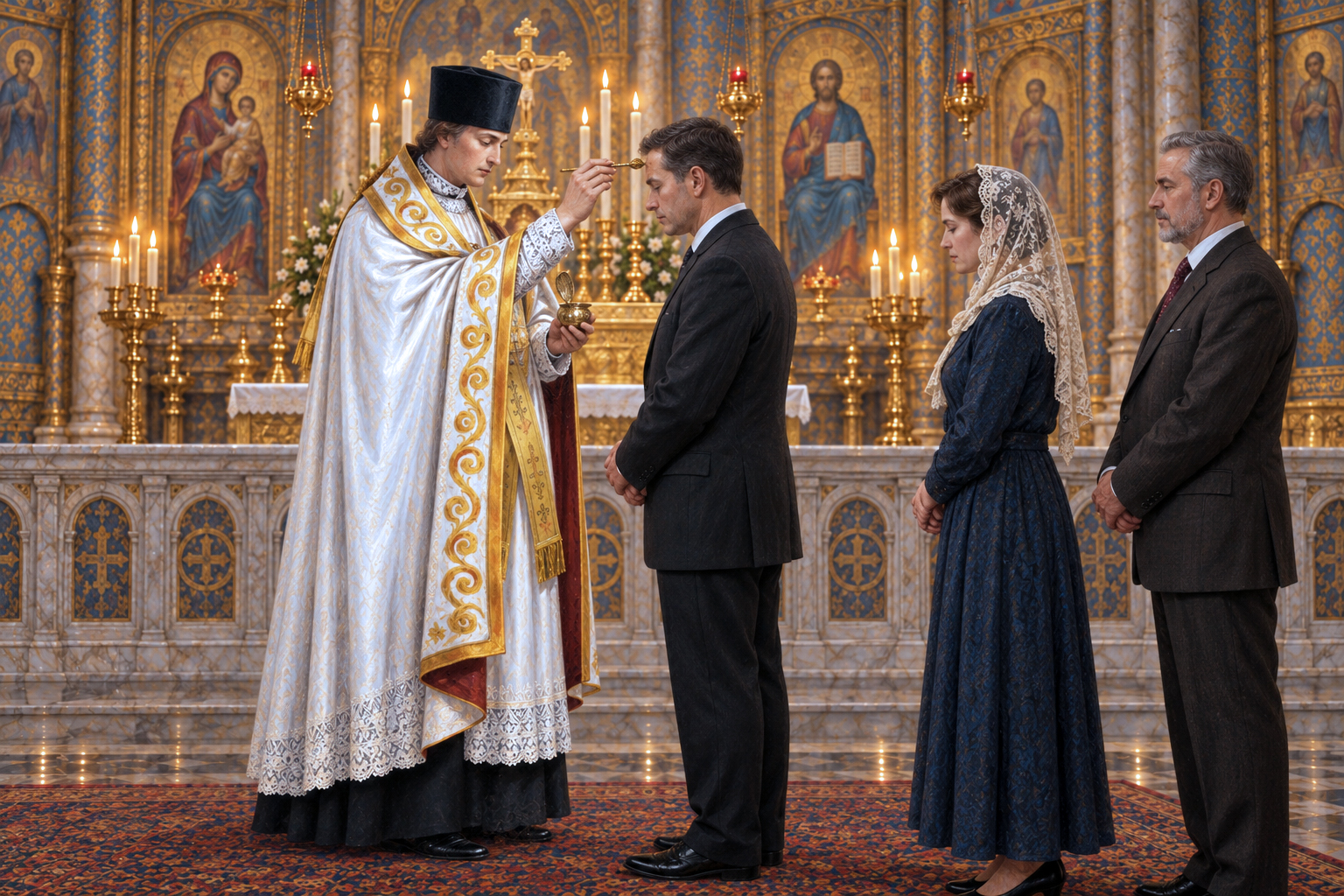
On solemn holy days, here the priest optionally may come forth into the nave and stand, as the faithful come forward to him singly for anointing with the Oil of the Catechumens. If this is performed, then the priest says:
We anoint thee with the oil of salvation
in the name of Christ our Savior.
The deacon bows to the priest, then goes to the chancel gate and, facing the altar, he says:
Deacon: Let us complete our prayer to the Lord.
People: Lord, have mercy.
Deacon:
For the precious
Gifts
here set forth,
let us pray to the Lord.
People: Lord, have mercy.
Deacon:
For this holy
temple
and for all who enter it with faith,
reverence, and the fear of
God, let us pray to the Lord.
People: Lord, have mercy.
Deacon:
That
we may be delivered from all affliction, wrath, and
need, let us pray to the Lord.
The Deacon remains at the chancel rail.
CREED
People: I believe in one God,
the Father almighty, Maker of heaven and earth, and of all
things,
visible and invisible. And in one Lord Jesus
Christ, the only begotten Son of God. Begotten of his
Father, before all
ages. God of God: Light of Light: very God of very God. Begotten, not
made,
being of one substance with the Father, by whom all things were made.
Who, for
us men and our salvation, came down from heaven. (Here
bow.)
And was
incarnate
by the Holy Ghost of the Virgin Mary: and was made man. (Here
rise.) And was
crucified also for us under Pontius Pilate; He suffered and was buried.
And the
third day he rose again in accordance with the Scriptures and ascended
into
Heaven and sitteth at the right hand of the Father. And he shall come
again
with glory to judge both the quick and the dead ; Whose kingdom shall
have no
end. And I believe in the Holy Ghost, the Lord, and Giver of Life, who
proceedeth from the Father, who with the Father and Son
together is
worshipped and glorified. Who spake by the prophets. And in one, Holy, Catholic and
PREFACE AND CANON
The deacon makes a small bow and returns to the Altar.
The priest turns to the people:
Priest: The Lord be with you.
People: And with thy spirit.
The priest turns again to the East and elevating his hands, says:
Priest: Let us lift up our hearts!
People: We lift them up to the Lord.
Then, crossing his hands upon his breast and bowing before the Holy Table, the priest says:
Priest: Let us give thanks to the Lord.
People: It is proper and just to worship the Father, and the Son, and the Holy Spirit, the Trinity, one in essence and undivided.
The priest rises and, extending his hands, says:
Priest: It is proper and just to sing hymns unto Thee, to bless Thee, to praise Thee, to give thanks unto Thee, to worship Thee in every place of Thy dominion; for Thou art God ineffable, inconceivable, invisible, incomprehensible, ever existing, and eternally the same; Thou, and Thine only‐begotten Son, and Thy Holy Spirit; Thou brought us forth from nothingness into being, and when we had fallen raised us up again, and left nothing undone until Thou brought us to heaven and bestowed upon us Thy Kingdom to come. For all this we give thanks unto Thee, and unto Thine only‐begotten Son, and to Thy Holy Spirit, for all that we know and that we do not know, the manifest and the hidden benefits bestowed upon us.
We thank Thee also for this liturgy, which Thou hast willed to accept from our hands, even though there stand before Thee thousands of archangels, tens of thousands of angels, Cherubim and Seraphim, six‐winged, many‐eyed, soaring aloft on their wings, singing, shouting, crying out, and saying the triumphal hymn:
Here bow:
People: Holy, holy, holy is the Lord of Hosts, heaven and earth are full of Thy glory; hosanna in the highest. Blessed is He + Who cometh in the Name of the Lord, hosanna in the highest.
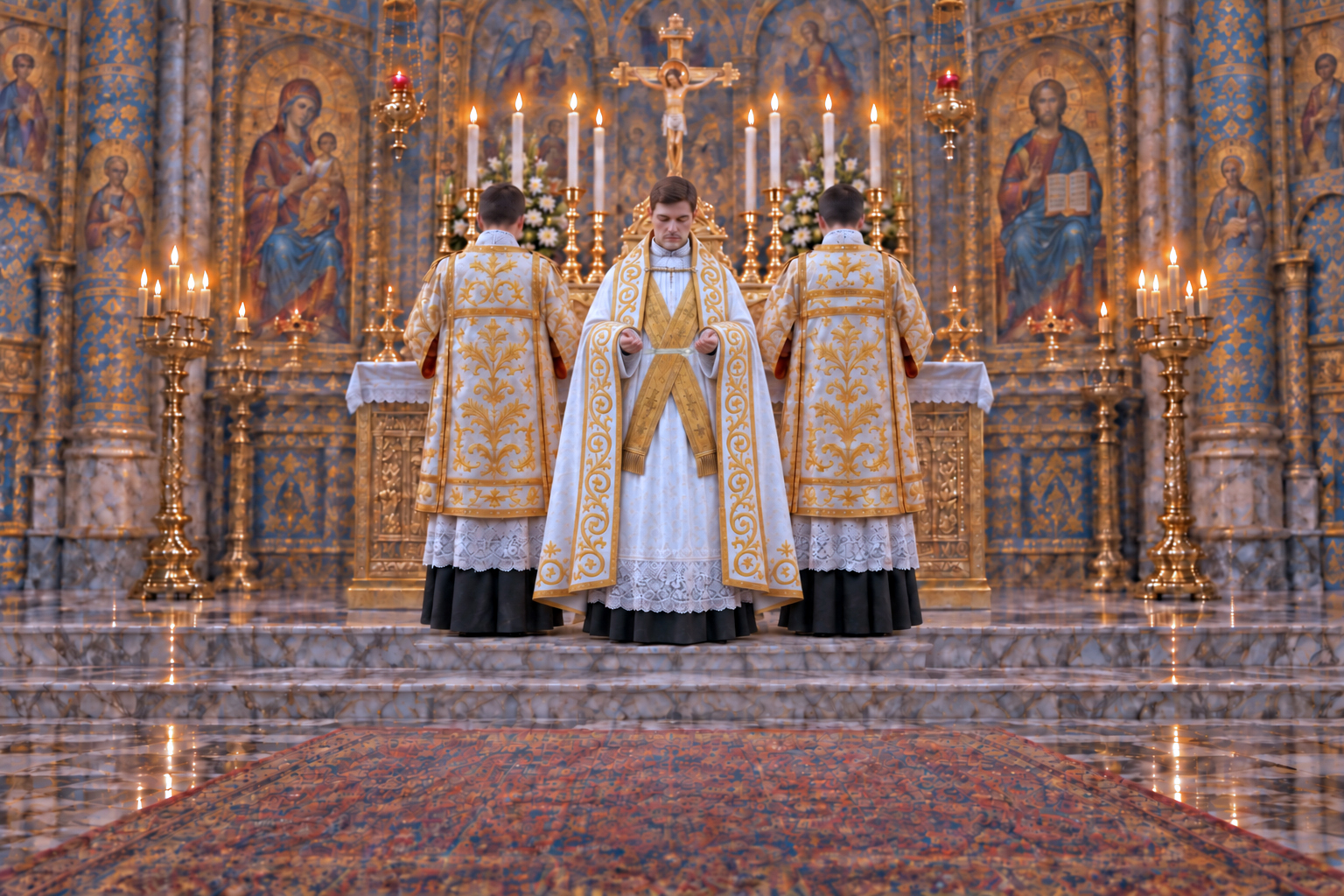
CONSECRATION OF THE ELEMENTS
Here the priest unveils the offerings. The host remains upon the paten. The ciborium containing the peoples’ hosts is placed behind the chalice. The priest pours the wine into the chalice, then blesses the water with the sign of the cross and pours a small amount into the chalice.
The priest then extends and raises his hands, simultaneously elevating his gaze to heaven. He then joins his hands and prays in a subdued voice:
Priest: With these blessed Powers, O Master, the Lover of Mankind we too cry out and say: Holy art Thou and all‐holy, Thou, and Thine only‐begotten Son, and Thy Holy Spirit; holy art Thou and all‐holy and majestic is Thy glory, Who so loved Thy world that Thou gavest Thine only‐begotten Son, that everyone who believeth in Him should not perish, but should have life everlasting; Who, having come and having fulfilled the whole divine plan concerning us, on the night when He was handed‐over, or rather, when He handed‐over Himself for the life of the world, He took bread into His holy and all pure and unblemished hands, He gave thanks (here bow), and He blessed it +, He sanctified it, He broke it, and gave it to His holy disciples and apostles, saying:
(The priest holds his hands over the host.)
Aloud:
Take,
eat, this
is My Body which is broken
for you for the forgiveness of sins.
The priest replaces the asterisk over the host. Making the sign of the Cross upon themselves, the priest, deacon, and sub-deacon together make a profound bow.
People: Amen.
The priest uncovers the chalice and continues in a subdued voice:
Priest: Likewise the chalice + after supper, saying:
(The priest holds his hands over the chalice.)
Aloud:
Drink of this, all of you, this is My Blood of the New Covenant, which is poured out for you and for many, or the forgiveness of sins.
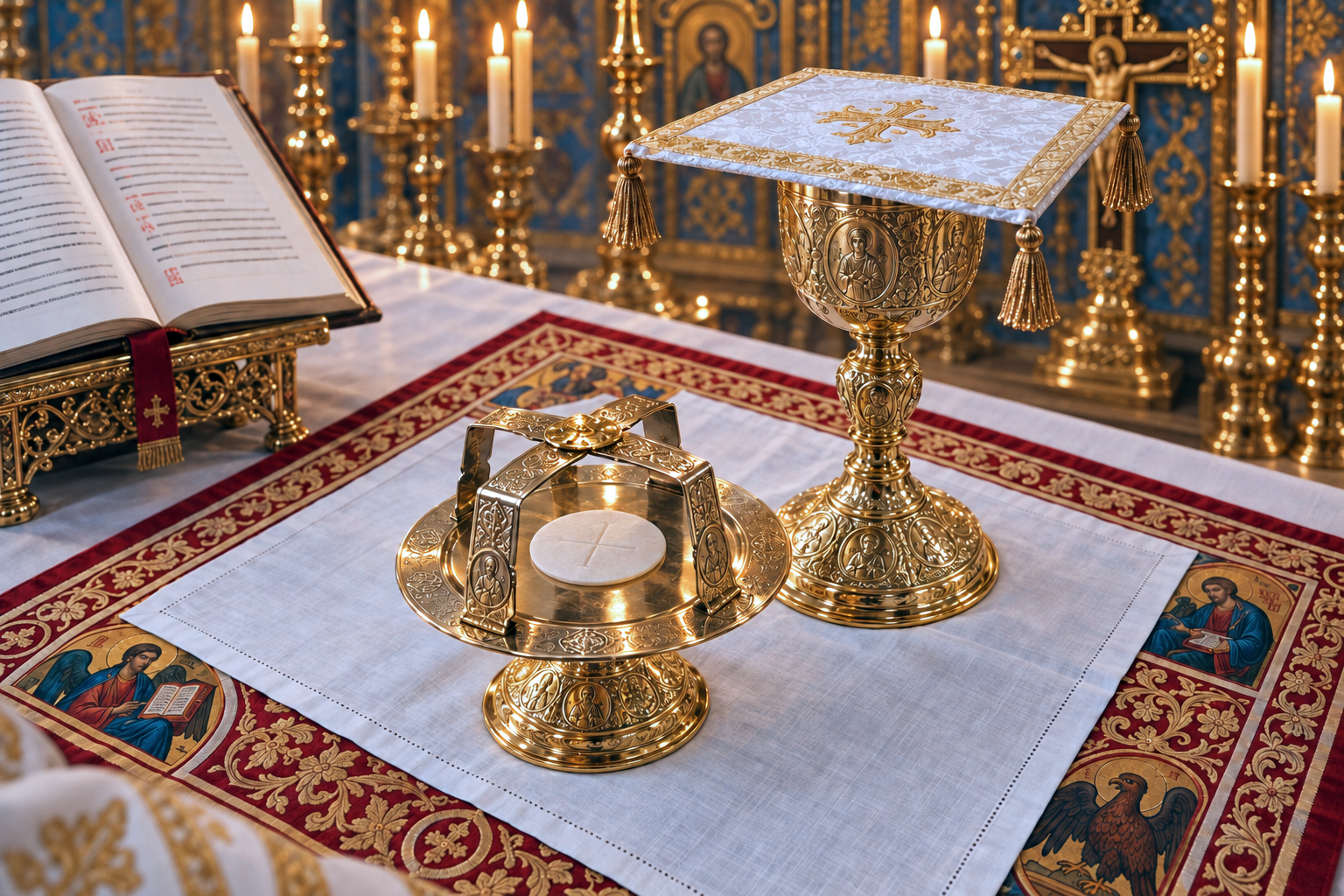
And again making the sign of the Cross upon themselves, the priest, deacon, and sub-deacon together make a profound bow. People: Amen.
The priest covers the chalice and prays in a subdued voice with hands joined as usual:
Priest: Remembering, therefore, this saving command, and all that was done in our behalf: the Cross, the Tomb, the Resurrection on the third day, the Ascension into heaven, the Sitting at the Right Hand, the Second and Glorious Coming Again.
The priest uncovers the chalice. He makes the sign of the cross thrice, saying:
Offering Thee, + (over the host) Thine own, + (over the chalice) from Thine own, + (over both the chalice and paten) ...
The priest, holding the chalice, elevates it slightly, saying:
on behalf of all and for all.
The priest, holding the paten, elevates it slightly, saying:
World without end. Amen.
The priest returns the host to the paten, and he, the deacon, and sub-deacon again make a profound bow.
People: We praise Thee, we bless Thee, we thank Thee, O Lord, and we pray to Thee, our God.
And the priest continues in a subdued voice:
Priest: Moreover we offer to Thee this spiritual and unbloody sacrifice, and we implore, and pray, and entreat Thee, send down Thy Holy Spirit upon us and upon these Gifts here set forth.
The three sacred ministers bow three times before the Holy Table.
Priest: And make this bread the precious Body of Thy Christ; And that which is in this chalice, the precious Blood of Thy Christ, changing them by Thy Holy Spirit.
Deacon: Amen. Amen. Amen.
Priest: That to those who partake of them, they may be for the purification of the soul, for the forgiveness of sins, for the communion of Thy Holy Spirit, for the fullness of the kingdom of heaven, for boldness before Thee, but not for judgment or condemnation.
Moreover, we offer to Thee this spiritual sacrifice for those who have fallen asleep in faith: the Forefathers, Fathers, Patriarchs, Prophets, Apostles, Preachers, Evangelists, Martyrs, Confessors, Ascetics, and for every righteous spirit made perfect in faith.
We offer to Thee this spiritual sacrifice especially for our most holy, most pure, most blessed and glorious Lady, the Mother of God and ever‐Virgin Mary.
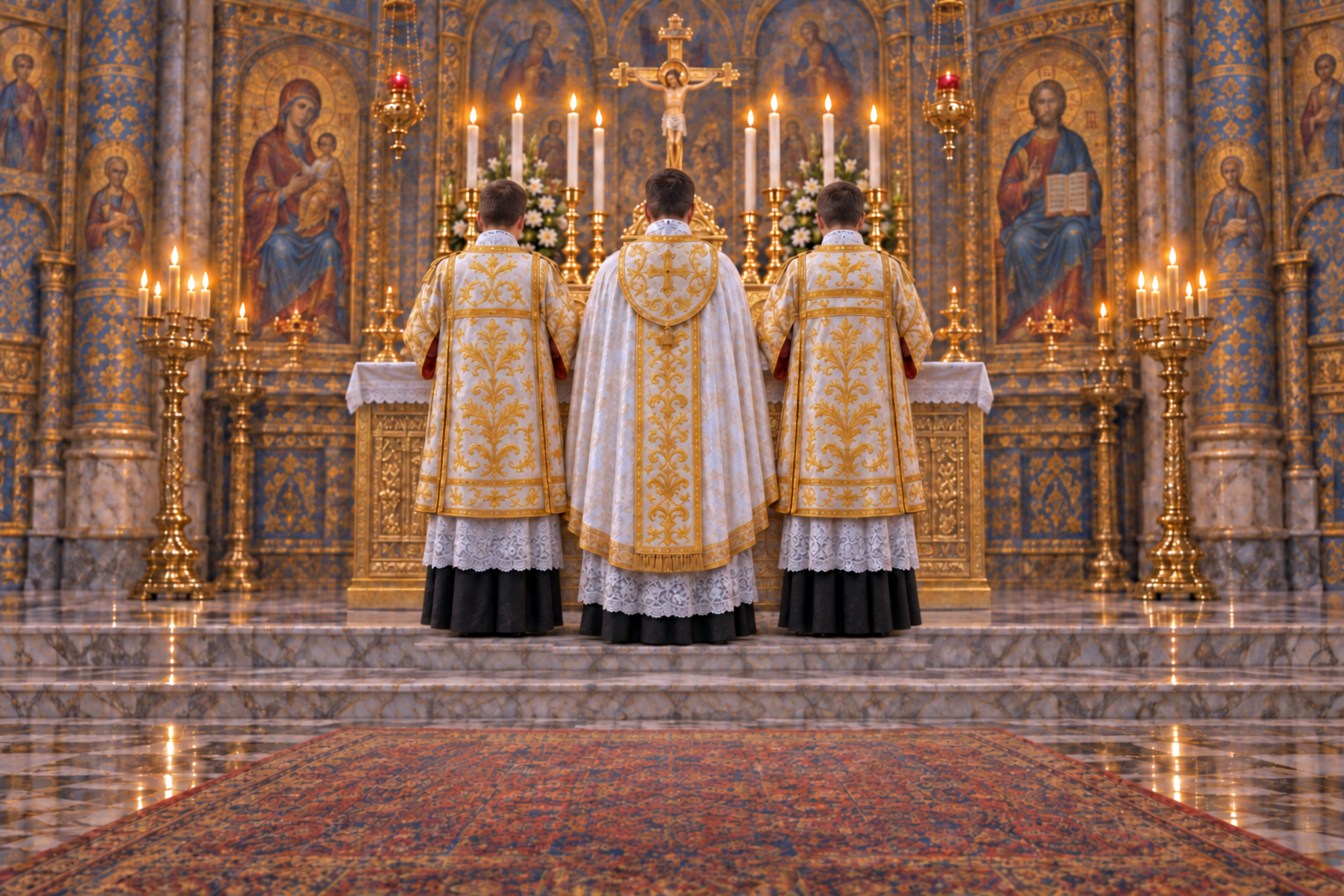
Taking the censer, again he censes the Holy Gifts and altar in the usual manner.
The priest continues in a subdued voice:
Priest: O Lord Jesus Christ, our God, hear us from Thy holy dwelling‐place, from the throne of the glory in Thy kingdom; and come to sanctify us, Thou Who art seated on high with the Father, and Who yet abide here invisibly among us. With Thy mighty hand, deign to give us Thy most pure Body and precious Blood, and, through us, to all the people.
The priest uncovers the chalice. The priest takes the host in both hands and breaks it in half over the chalice, saying:
Priest: Broken and distributed is the Lamb of God, broken yet not divided, ever eaten yet never consumed, but sanctifying those who partake thereof.
The priest places the left half on the paten and then breaks a small particle from the right half. The small particle is placed in the chalice, saying:
Priest: The fullness of the Holy Spirit.
Deacon: Amen.
Priest: I will receive the bread of heaven and call upon the Name of the Lord.
Priest: Lord, I am not worthy that thou shouldst come under my roof; but speak the word only and my soul shall be healed.
Priest: The Body of our Lord Jesus Christ preserve my soul unto life everlasting. Amen.
Priest: What reward shall I give unto the Lord for all the benefits that he hath done unto me? I will receive the cup of salvation and call upon the Name of the Lord. I will call upon the Lord, which is worthy to be praised, so shall I be safe from mine enemies.
The Blood of our Lord Jesus Christ preserve my soul unto life everlasting. Amen.
Then he receives all the Precious Blood, together with the Particle.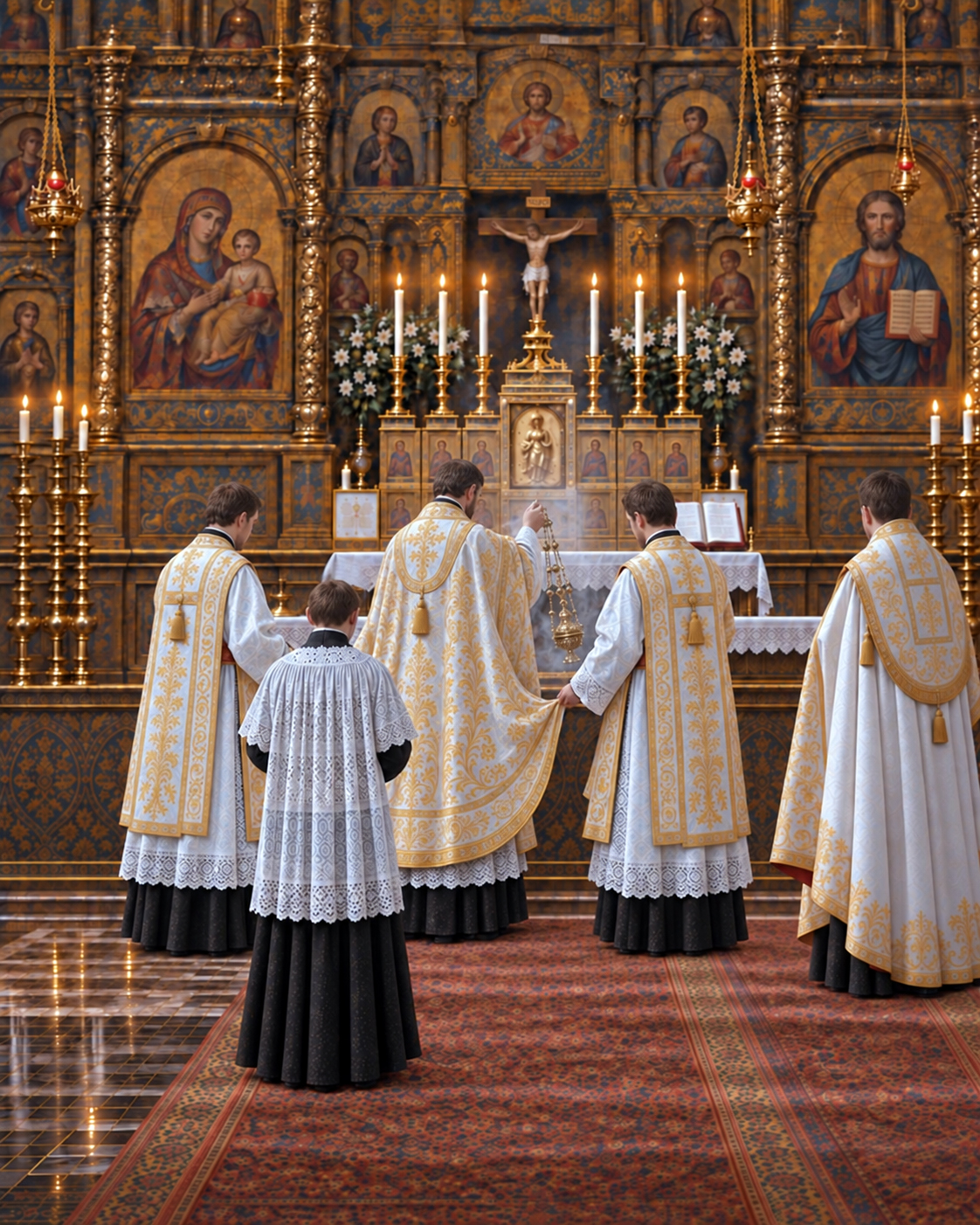
Priest: Behold the Lamb of God, behold him who taketh away the sins of the world.
And then he says with the people three times:Lord, I am not worthy that thou shouldst come under my roof; but speak the word only and my soul shall be healed.
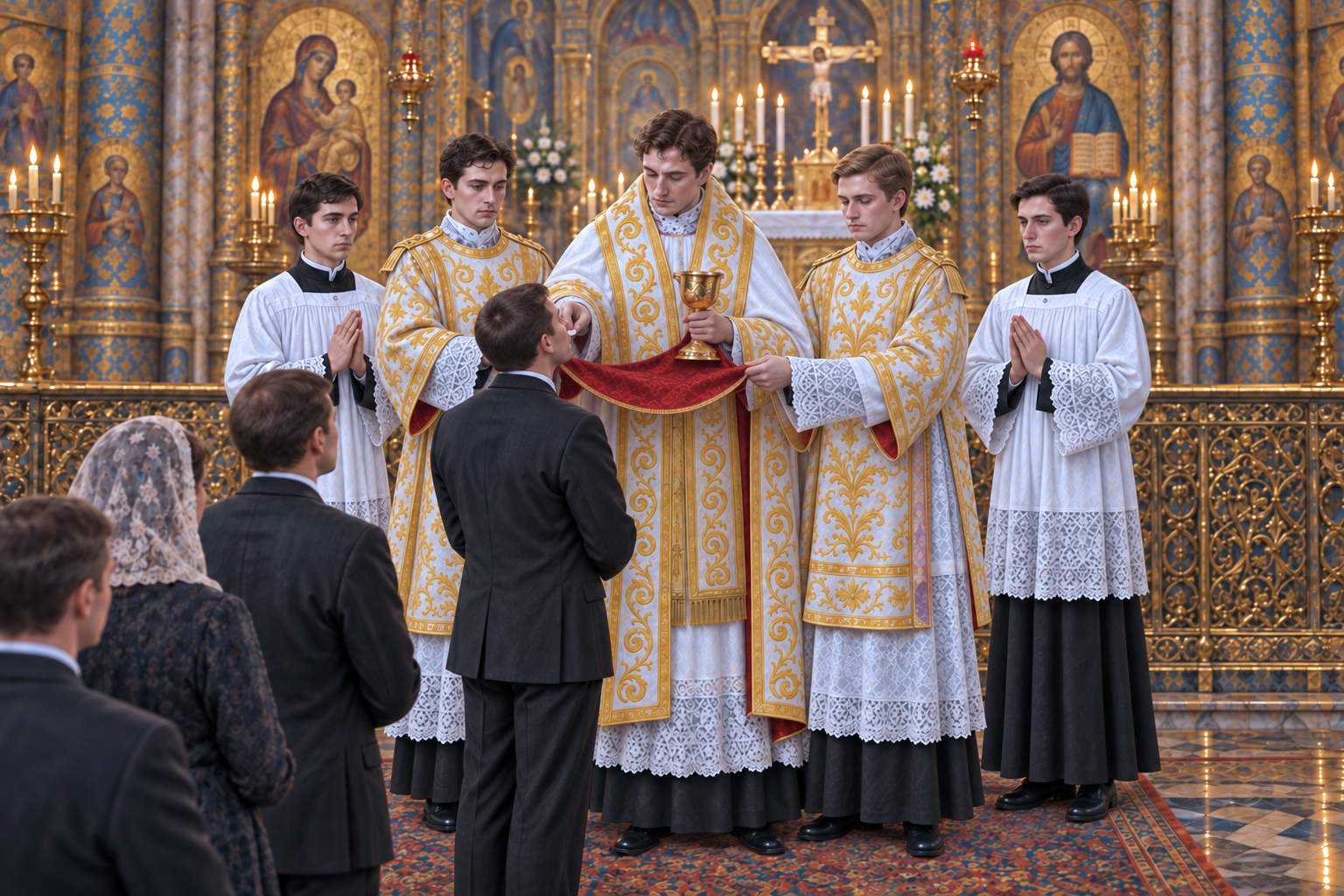
He administers the communion to the Sacred Ministers, then the other clergy, then the servers, each in order of rank, and then to the faithful, saying to each:Priest: The Body of our Lord Jesus Christ preserve thy soul unto life everlasting. Amen.
The priest says silently:Priest: Grant that what we have received with the mouth, O Lord, we may keep with a pure heart; and that from this temporal gift may come unto us life everlasting.
Then he holds out the Chalice to the deacon, who pours wine into it for the first ablution; then the priest proceeds:Priest: May the flesh which I have taken and the Blood which I have drunk, O Lord, cleave unto mine inmost soul, and grant that no spot of sin may abide in me, whose meat hath been thine incorrupt and Holy Sacraments. Who livest and reignest for ever and ever. Amen.
The priest then washes his fingers and receives the second ablution. Then he covers the chalice and veils the sacred vessels on the altar. He remains in the centre of the altar (or returns to the throne, if a Bishop).
POSTCOMMUNION
Priest: Save Thy people, O God, and bless Thine inheritance.
People: Amen.
Priest: May our mouths be filled with Thy praise, O Lord, so that we may sing of Thy glory, for Thou hast made us worthy to partake of Thy holy, divine, immortal and life‐creating Mysteries. Keep us in Thy holiness, so that all the day long we may meditate on Thy righteousness. Alleluia, Alleluia, Alleluia! (Alleluia is omitted during penitential rites.)
Priest: We give thanks to Thee, O Master, Lover of Mankind, benefactor of our souls, that this day Thou hast made us worthy of Thy heavenly and immortal Mysteries. Make straight our path, confirm us in our fear of Thee, guard our life, make firm our steps, through the prayers and intercession of the glorious Mother of God and ever‐Virgin Mary, and of all Thy Saints. For Thou art our sanctification, and to Thee we send up glory, Father, Son, and Holy Spirit, now and ever, and unto the ages of ages.
People: Amen.
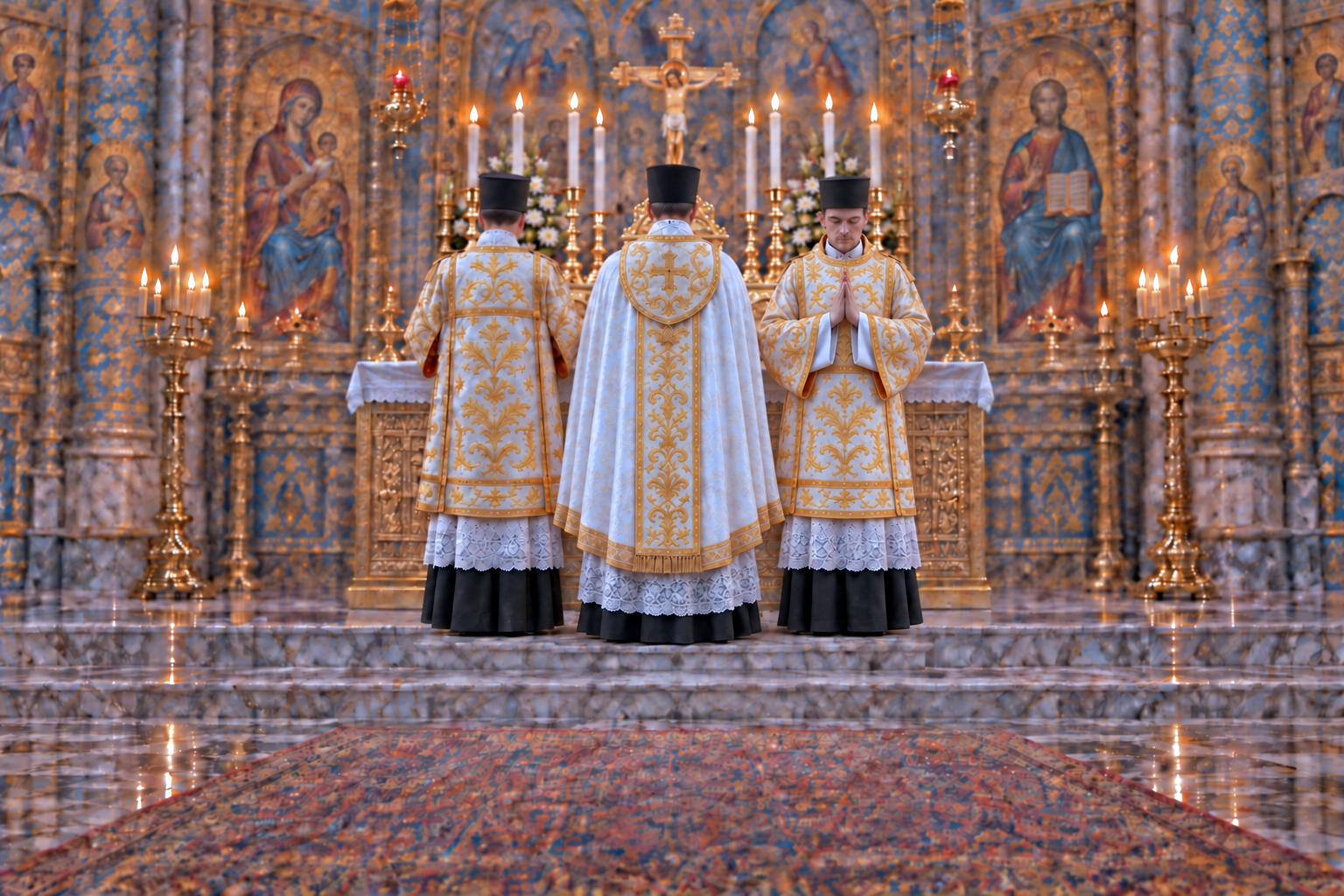
Turning to the people, the Deacon says:
Deacon: Let us go forth in peace.
People: In the Name of the Lord.
In the case of a Liturgy of the Dead,
instead the Deacon says:
Deacon:
May they rest in peace.
People:
Amen.
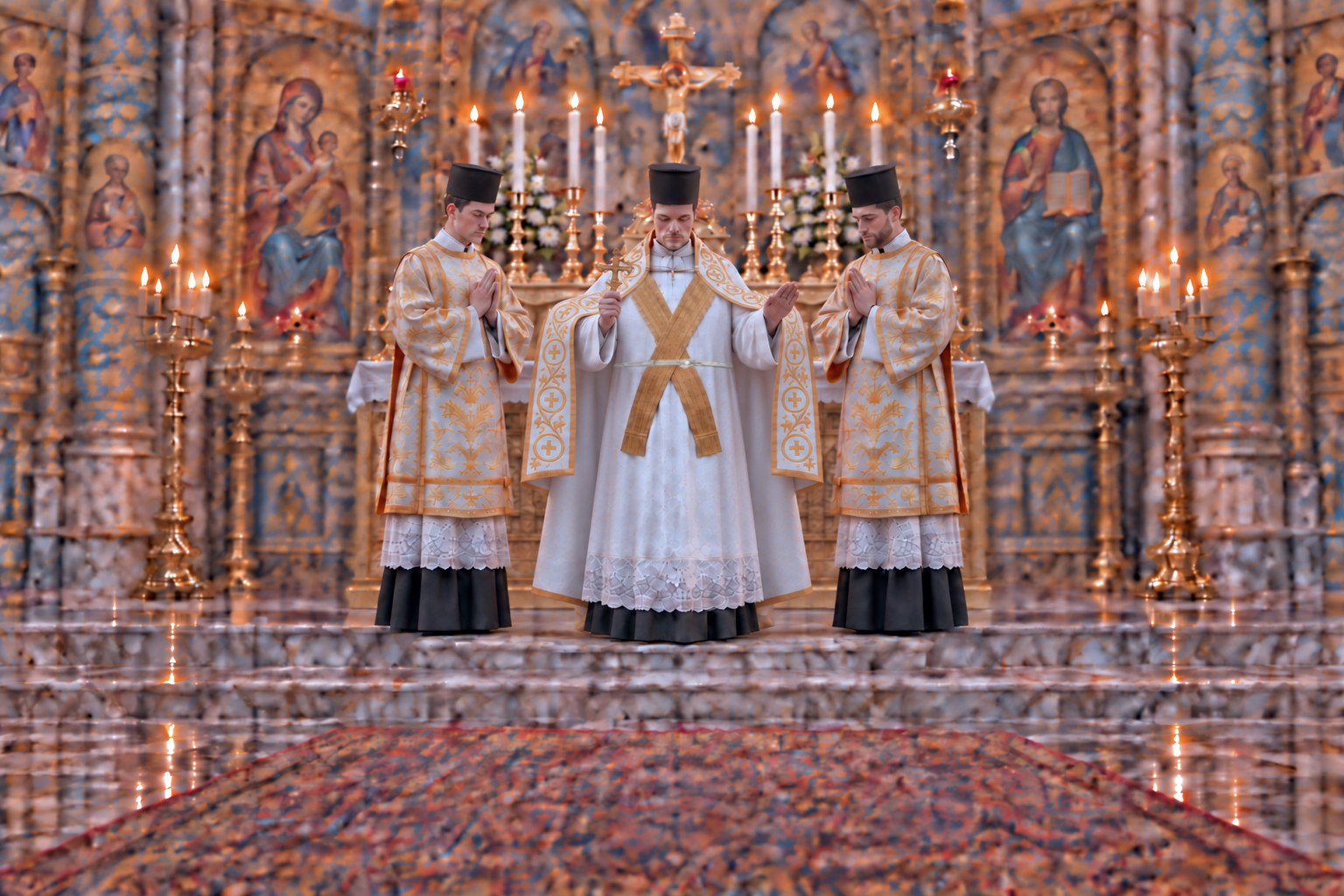
Turning to the people, the priest blesses the people, saying:
Priest: May almighty God bless you, Father, Son, + and Holy Ghost.
People: Amen.