

Institutional continuity
From the Southwest to Rome-Ruthenia
The historic Anglican Diocese of the Southwest is the parent diocese from which the present Diocese of Rome-Ruthenia developed.
Its episcopal succession, institutions, archives, and ecclesiastical patrimony continue within the United Roman-Ruthenian Church. Known from 2011 as the See of St. Stephen, the jurisdiction assumed its present diocesan identity through the act of union that established the modern Church in 2023.
St. Edwin Caudill brought the Diocese into the fullness of Orthodox and Catholic Apostolic succession. Its later development gathered that inheritance into an autocephalous Eastern Roman Church with Latin heritage.
The historical sequence at a glance
Development of the episcopal jurisdiction
The names and forms changed as the Diocese received additional succession, responsibility, and patrimony; the episcopal line and institutional inheritance continued through that development.
Independent Diocese of the Southwest
The Diocese left the Anglican Catholic Church in 1982 and was separately incorporated in 1983 under its first bishop, the Right Reverend Robert C. Harvey.
Orthodox and Catholic Apostolic succession
St. Edwin Caudill received conditional consecration through Macario Ga of the Philippine Independent Catholic Church, bringing the Diocese into converging Orthodox and Catholic lines of Apostolic succession.
Reactivation of the Diocese
The remnant jurisdiction was reactivated by Apostolic mandate within the Apostolic Communion of Anglican Churches, restoring its institutional life after the divisions of the 1990s.
Metropolitan Archdiocese
The Diocese became the Metropolitan Archdiocese of the Southwest as its structure, international relationships, publications, and pastoral responsibilities expanded.
The See of St. Stephen
The jurisdiction became non-territorial and was renamed for its patron, St. Stephen the Apostle and Archdeacon. It served as the principal diocese of the Anglican Patriarchate of Rome, also known as the Patriarchate of St. Stephen.
Papal status and Coadjutorship of Rome
With the grant of papal status within its own Church and reception of the Coadjutorship of the Roman diocese, the See entered the fuller Petrine vocation later expressed publicly in Rome-Ruthenia.
International public service
The Church’s foundation held special consultative status with the United Nations Economic and Social Council under its incorporated name, the Anglican Rite Roman Catholic Church.
The Gallo-Russo-Byzantine Catholicate
The Catholicate was formally established, bringing the Church’s Eastern and Gallican inheritance into a principal jurisdiction alongside the historic See of St. Stephen.
The Diocese of Rome-Ruthenia
The Anglican Patriarchate of Rome and the Gallo-Russo-Byzantine Catholicate converged in the act of union establishing the modern United Roman-Ruthenian Church. The parent See assumed its present name as the Diocese of Rome-Ruthenia.
Full public manifestation
The succession reached its intended completion in the full public manifestation of the Roman-Ruthenian papal title and the Diocese’s present identity.
The complete historical account
Origins and Apostolic convergence
The Diocese of the Southwest originated within the continuing Anglican movement following its departure from the Episcopal Church of the United States. After leaving the Anglican Catholic Church in 1982, it was incorporated independently in 1983. The first bishop was the Right Reverend Robert C. Harvey. The Diocese subsequently entered the American Episcopal Church, a body distinct from the Episcopal Church of the United States and predating the St. Louis continuing-Anglican movement.
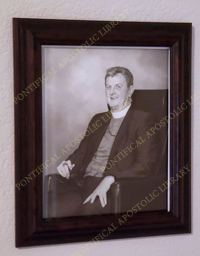
St. Edwin Caudill—the Right Reverend Howard Edwin Caudill, canonised in 2023—succeeded Bishop Harvey as Bishop Ordinary. In the late 1980s, he withdrew the Diocese from the American Episcopal Church into the Anglican Church, Inc. In 1993 he was consecrated sub conditione by Macario Ga, Supreme Pontiff of the Philippine Independent Catholic Church, in diverse Orthodox and Catholic Apostolic succession.
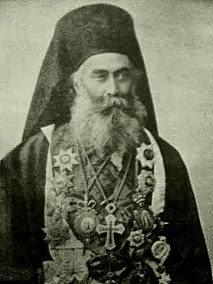
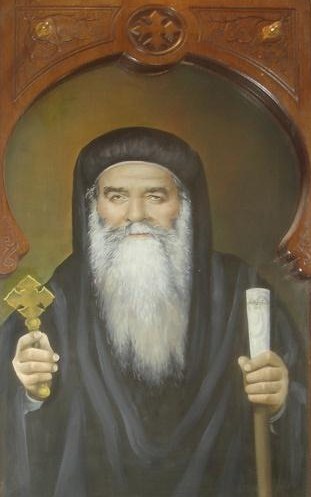
This act began the convergence of Apostolic heritage and tradition preserved today by the United Roman-Ruthenian Church. The succession included, among many others, Damian I, Greek Orthodox Patriarch of Jerusalem, and Cyril VI, Coptic Orthodox Pope and Patriarch of Alexandria. For that reason, although he was the second Bishop of the Southwest, St. Edwin is honored as Apostolic Founder of the See of St. Stephen and its continuation in Rome-Ruthenia.
St. Edwin Caudill
St. Edwin’s episcopal ministry supplied the decisive sacramental inheritance of the modern See. His papers, publications, photographs, and correspondence are preserved in the Stephenian Archives and the Pontifical Apostolic Library.
Episcopal succession
The Bishops of the Southwest
Five bishops carried the historic See from its independent Anglican period into its metropolitan and Roman-Ruthenian development.
Robert C. Harvey
First Bishop of the Southwest
St. Edwin Caudill
Apostolic Founder and Confessor
Wayne Ellis
Third Bishop of the Southwest
Keith Cardinal Steinhurst
Fourth Bishop of the Southwest
Pope Radislav I
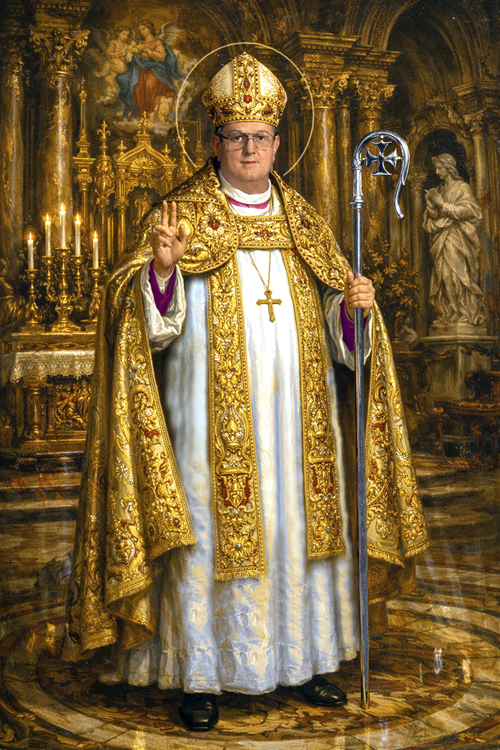
First Metropolitan Archbishop of the Southwest and first Prince-Bishop of Rome-Ruthenia
Interruption, restoration, and growth
The reactivated Diocese and Metropolitan Archdiocese
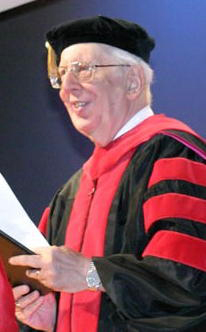
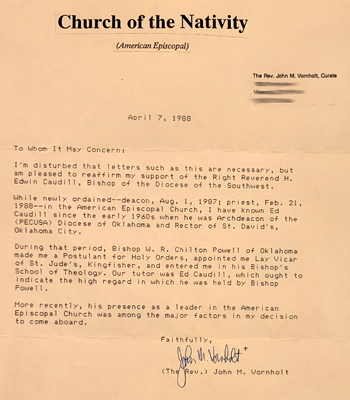
Historically, the Diocese of the Southwest comprised the greater part of Texas, New Mexico, Louisiana, and Oklahoma. The Diocese suffered division in the 1990s. Its remaining institutional line entered the Apostolic Communion of Anglican Churches in 2008. The Very Reverend Dean John Mark Vornholt returned in 2009 and recognized the reactivated body as the continuation of the Diocese in which he had served under Bishop Caudill.
The new Bishop of the Southwest served as Vicar-General of the Apostolic Communion of Anglican Churches and was succeeded by Archbishop Rutherford Johnson, now Pope Radislav I of Rome-Ruthenia. Under his leadership the jurisdiction became the Metropolitan Archdiocese of the Southwest. Its historic seminary, led previously by Bishop Caudill, was also reactivated as St. George Theological Seminary and continues today within the Pontifical Georgian College.
From this period forward, the Diocese was no longer part of the continuing-Anglican movement. It professed Orthodox and Catholic faith while retaining its Romanized Anglican liturgical inheritance as one historic rite within its wider ecclesiastical life.




An international metropolitan jurisdiction
Ministry beyond the American Southwest
From 2008, the Metropolitan Archdiocese developed an international presence through affiliation, collaboration, education, publication, and pastoral activity in North America, South America, Europe, and Asia. The Archdiocese published its own liturgical books and developed an extensive theological and cultural publishing program.
Archbishop Johnson represented the Archdiocese internationally, including at the G20 Seoul Summit in 2010, while maintaining relationships across Anglican, Catholic, and independent episcopal circles.




The See of St. Stephen and the Roman inheritance
From the Metropolitan Archdiocese to Rome-Ruthenia
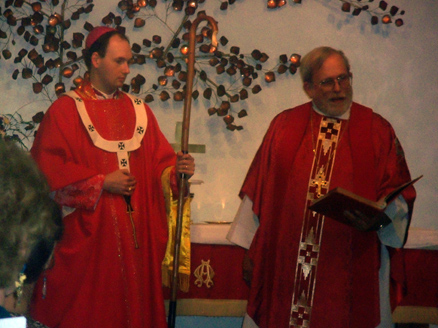
In 2011 the Metropolitan Archdiocese was renamed for St. Stephen the Apostle and Archdeacon. As the See of St. Stephen, it became a non-territorial patriarchal jurisdiction and the principal diocese of the Anglican Patriarchate of Rome. It was also historically known as the Anglican Rite Roman Catholic Church and the Imperial Patriarchate, names reflecting its received spiritual and temporal patrimony.
In 2014, the grant of papal status within the Church and the reception of the Coadjutorship of Rome placed the earlier diocesan succession within its fuller Petrine vocation. The acts associated with that development informed the underlying life of the Patriarchate before their progressive public presentation beginning in 2020.
The Gallo-Russo-Byzantine Catholicate was established in 2022, representing the Church’s Eastern, Gallican, and Ruthenian inheritance. In 2023 the Anglican Patriarchate of Rome and the Catholicate converged in the act of union that established the modern United Roman-Ruthenian Church. The historic parent See became the Diocese of Rome-Ruthenia.
The Diocese of Rome-Ruthenia preserves the episcopal and institutional continuity of the Diocese and Metropolitan Archdiocese of the Southwest, the See of St. Stephen, and the Coadjutorship of Rome. Its records remain in the Stephenian Archives.
The historic First Chair
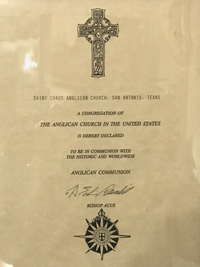
St. Chad’s in San Antonio served as the cathedral of St. Edwin Caudill and preserves the throne associated with the historic First Chair of the succession. The church building subsequently followed a separate ecclesiastical course, while its place in the history of the parent Diocese remains part of the Roman-Ruthenian record.
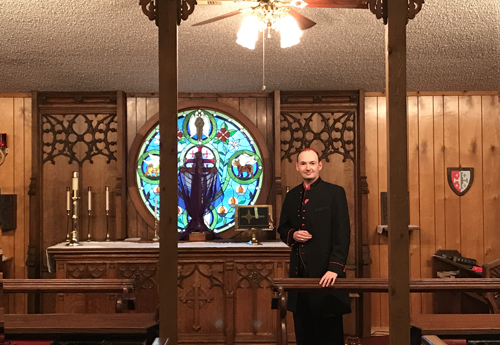
Visible institutional continuity
The arms of the historic and present Diocese
The shield of the Diocese of the Southwest continued and acquired fuller meaning as the jurisdiction developed into the Diocese of Rome-Ruthenia.


A shield whose meaning developed with the See
The shield was originally that of the Diocese of the Southwest. Through the ecclesiastical concessions received by the jurisdiction, it continued into the Diocese of Rome-Ruthenia and came also to be shared by the Most Holy Patriarchal Basilica of Santa Maria Antiqua.
The St. George cross is the central Christian emblem and alludes within the Roman-Ruthenian tradition to St. Peter. The sun signifies Christ unconquered, Light of the world, and recalls St. Stephen, whose face “shone like an angel” (Acts 6:15).
The blue field bears Marian symbolism and evokes St. Andrew the First-Called, reflecting the Russian and Eastern Apostolic heritage of the united Church. The star and crescent are likewise ancient Marian signs and recall the eschatological imagery of St. Mark’s Gospel: the passing of the old order and the dawn of Christ’s Kingdom.
The documentary record
Constitution, publications, and correspondence
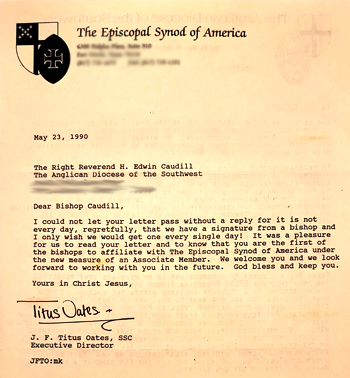
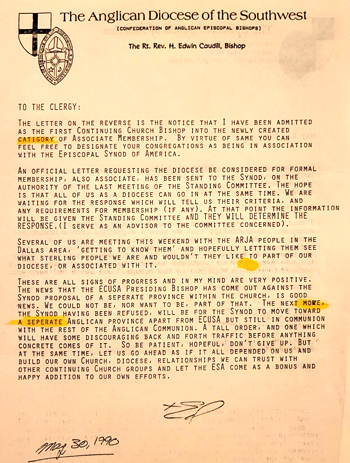
The Stephenian Archives and Pontifical Apostolic Library preserve the constitutional, sacramental, educational, and pastoral record of the historic Diocese.
Original Constitution and Canons
The original governing text remains available as a primary document of the Anglican Diocese of the Southwest.
Read the Constitution and Canons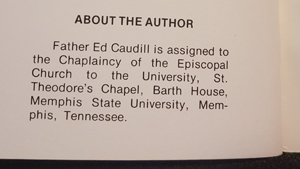
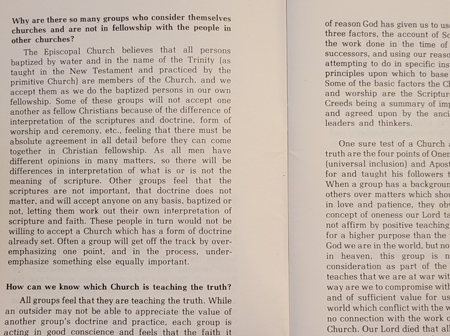
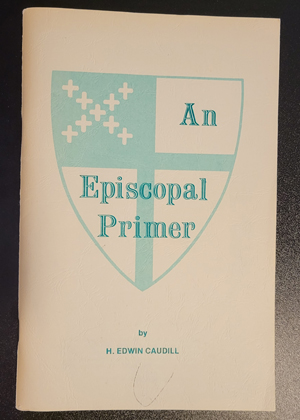
An Episcopal Primer, written by St. Edwin Caudill while serving as a priest of the Episcopal Church of the United States, presented a basic catechism for a wide audience. The photographed copy is preserved in the Stephenian Archives.
Further reading
Journey of Faith
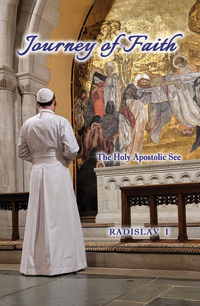
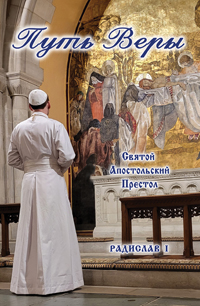
Journey of Faith: The Holy Apostolic See, by Radislav I, presents a broader history of the present See and the people whose work across decades and centuries prepared its modern form.

This archival page succeeds the former website at southwestdiocese.org and is maintained by the Holy Apostolic See of Rome-Ruthenia for the preservation of institutional history.