The Petrine dimension
The Pope is the visible head of the United Roman-Ruthenian Church and custodian of its Latin Orthodox Petrine inheritance, charged with preserving faith, unity, order, and Apostolic continuity.

The Holy Apostolic See of Rome-Ruthenia
One Petrine office in which spiritual jurisdiction and temporal custodianship are united in service to the Apostolic faith.
The office in brief
The Roman-Ruthenian Pope stands within a jurisdictional Petrine succession and a temporal Petrine succession. These are distinct dimensions of one inherited office, brought together in the governance of the United Roman-Ruthenian Church and the custodianship of its historic patrimony.
The office and title of Roman-Ruthenian Pope were formally conferred in 2014 upon the Prince-Bishop of Rome-Ruthenia, together with full papal authority within his own jurisdiction. The Roman-Ruthenian Pope exercises that office as Supreme Pontiff of the autocephalous United Roman-Ruthenian Church, the Eastern Roman Church with Latin heritage.
Spiritually and jurisdictionally, the Roman-Ruthenian Pope exercises the Petrine ministry within the autocephalous jurisdiction of the United Roman-Ruthenian Church, the Eastern Roman Church with Latin heritage. Temporally, he safeguards the sovereign, dynastic, cultural, and heraldic patrimony inherited through the Roman and Ruthenian successions.
The two dimensions belong to one office. The title Pope expresses the Petrine and pontifical ministry; Catholicos expresses patriarchal headship; and Prince-Bishop expresses the conjunction of ecclesiastical government with the temporal custodianship of the Pontifical Imperial State.
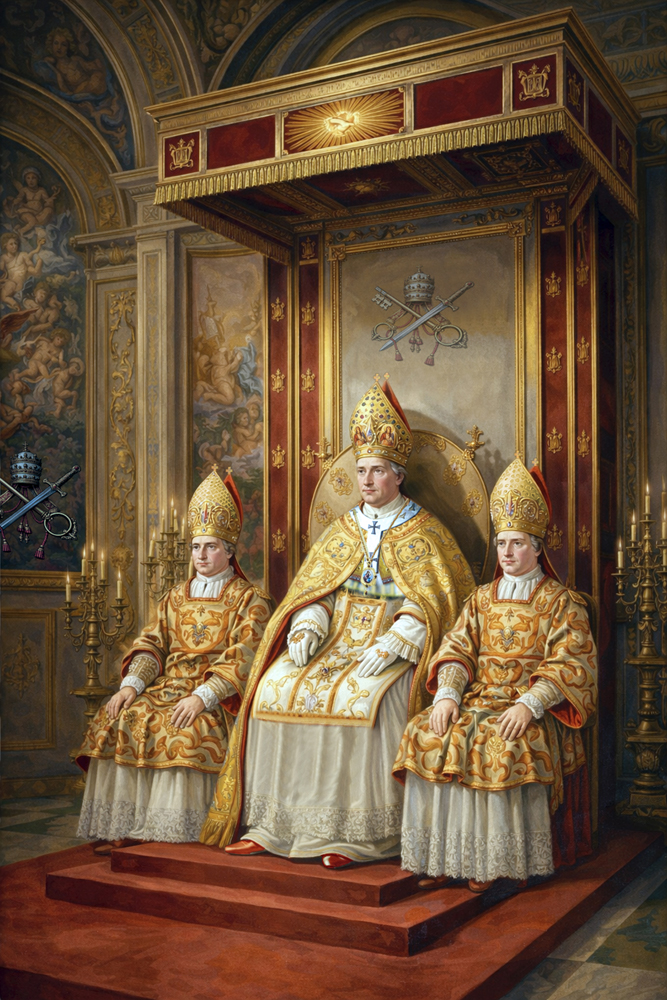
The Pope is the visible head of the United Roman-Ruthenian Church and custodian of its Latin Orthodox Petrine inheritance, charged with preserving faith, unity, order, and Apostolic continuity.
As Catholicos of Rome-Ruthenia, the Pope exercises patriarchal jurisdiction over the clergy, faithful, and constituent jurisdictions belonging to the Catholicate of Rome-Ruthenia.
As Prince-Bishop of Rome-Ruthenia, the Pope holds the temporal and dynastic custodianship joined to the Church through the Pontifical Imperial State of Rome-Ruthenia.
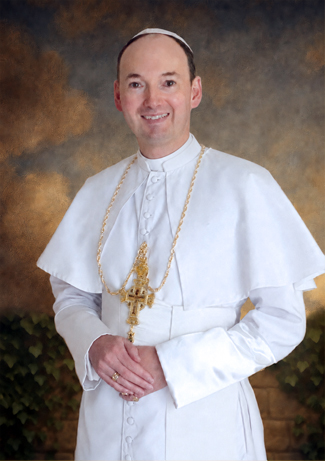
Spiritual and jurisdictional continuity
The Roman-Ruthenian Papacy is the present expression of the Petrine office within the United Roman-Ruthenian Church. In the Church’s ecclesiology, this is a jurisdictional succession: the transmission and exercise of Petrine authority within a distinct and continuing ecclesiastical jurisdiction.
This jurisdictional inheritance is more particular than episcopal ancestry. Apostolic succession identifies the sacramental lineage through which bishops were consecrated. Jurisdictional succession identifies the ecclesiastical office and authority that the Church continues. The Roman-Ruthenian Church traces that jurisdictional inheritance through the historic Roman line and understands its present institutional form as the contemporary expression of authority inherited from the ancient Petrine Church.
“Latin Orthodox” identifies the Church’s Western and Roman ecclesiastical inheritance within the fullness of Orthodoxy. Its liturgical life is principally Gallo-Russo-Byzantine while also preserving other Eastern and Western rites.
Ecclesial foundation
The Roman-Ruthenian Papacy is an ecclesiastical office grounded in inherited continuity and formally constituted through grant and recognition. Succession supplies the ecclesial foundation; grant confers the authority; and recognition acknowledges its legitimate exercise within the Church’s own jurisdiction.
The Apostolic, patriarchal, and jurisdictional successions of the United Roman-Ruthenian Church provide the continuing autocephalous ecclesial body within which the Petrine office is received and exercised.
Papal authority within the autocephalous Roman-Ruthenian jurisdiction was granted to the Prince-Bishop in connection with the Church’s established Apostolic continuity, recognized patriarchal status, and responsibility for its own governance.
The Church’s preserved ecclesiastical instruments record that in 2014 the Prince-Bishop of Rome-Ruthenia was recognized by the Roman Cardinal Dean as coadjutor of the Roman Pope and granted full papal authority within his own jurisdiction. The 2014 act conferred papal status and authority upon the Prince-Bishop within the Roman-Ruthenian jurisdiction, building upon—and giving a new juridical expression to—the Church’s pre-existing Apostolic, patriarchal, and jurisdictional continuity.
“Apostolic succession answers the question, ‘From whom were its bishops consecrated?’ Jurisdictional succession answers the different question, ‘What ecclesiastical authority and office does this Church continue?’”
Roman-Ruthenian teaching on Petrine governanceHistorical and temporal continuity
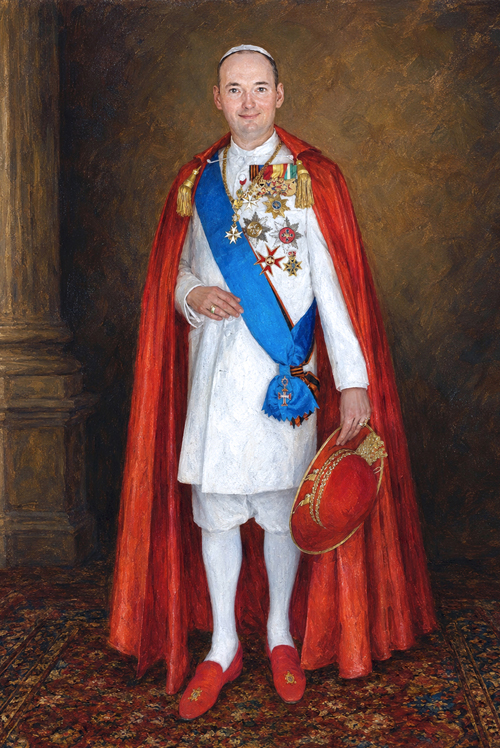
For centuries the historic Roman Papacy possessed ecclesiastical jurisdiction together with a temporal patrimony. Roman Pontiffs exercised sovereign prerogatives and bore temporal dignities bound to the political, cultural, and Christian inheritance of Rome.
The United Roman-Ruthenian Church holds that this historic patrimony passed into its custody through the Roman succession, including direct succession from Pope St. Leo X, and was joined to the inheritance of Ruthenia or Old Rus’. The Pontifical Imperial State of Rome-Ruthenia is the living institutional expression of that united temporal heritage.
In Roman-Ruthenian usage, the temporal successor of St. Peter is the custodian of the historic, non-sacramental patrimony associated with the Petrine office: its sovereign, dynastic, cultural, heraldic, and temporal inheritance.
Four records of continuity
The Roman-Ruthenian inheritance is documented through several complementary lines. Each records a different aspect of ecclesiastical or historical continuity.
Traces the historic succession of Supreme Pontiffs from St. Peter and presents the Roman-Ruthenian Latin Orthodox line in its relationship to the common Petrine inheritance.
View the PontiffsRecords the Roman, Russian, Syrian, Greek, American, and other patriarchal inheritances converging in the Catholicate of Rome-Ruthenia.
View the Patriarchal LinesDocuments sacramental episcopal lineage through Western and Eastern Churches to St. Peter, St. Andrew, and other Apostles.
View Apostolic SuccessionTraces the dynastic, imperial, royal, and pontifical inheritances entrusted to the Pontifical Imperial State of Rome-Ruthenia.
View Temporal Succession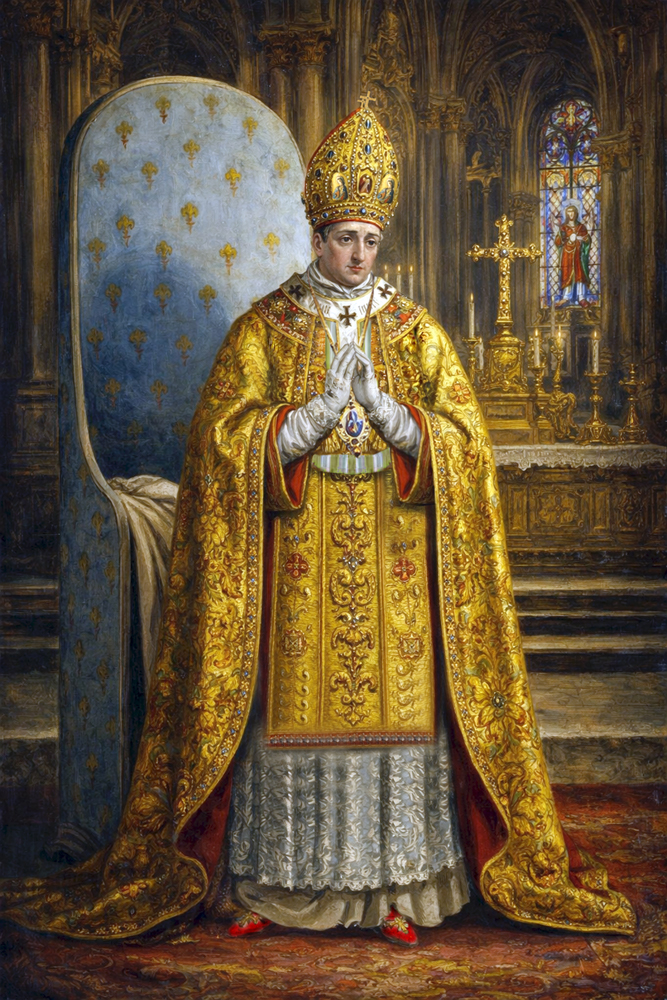
Custodia Petri
The keys of St. Peter signify responsibility as well as dignity: the preservation of Apostolic faith, the continuity of ecclesiastical ministry, and faithful custody of the spiritual and historical patrimony entrusted to the Church.
The Roman-Ruthenian Papacy brings these inheritances into a single sacred trust: office, responsibility, jurisdiction, patrimony, and inherited authority lived in the present.
The office in service
The Roman-Ruthenian Pope governs through institutions that translate the responsibilities of the office into ecclesiastical administration, household service, ceremony, diplomacy, and public witness.
The principal organs of administration serving the Holy Apostolic See.
Immediate institutional familyThe dynastic, domestic, and senior household structure surrounding the office.
Ceremony and serviceThe historic court offices supporting ceremonial, diplomatic, and ecclesiastical life.
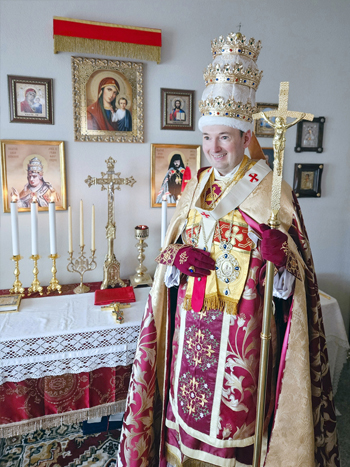
The present pontificate
His Apostolic Highness the Most Holy Pope Radislav I of Rome-Ruthenia is Prince-Bishop and Catholicos of Rome-Ruthenia and Supreme Pontiff of the United Roman-Ruthenian Church.
In that office, Pope Radislav is the 265th successor to St. Peter the Apostle in Apostolic Orthodox Latin Succession. He embodies the Church’s jurisdictional Petrine inheritance, stands within its sacramental Apostolic succession, and serves as custodian of its Roman and Ruthenian temporal patrimony.
The most solemn style of the Roman-Ruthenian Pope is His Most Holy Apostolic Highness. The customary ecclesiastical style is His Holiness.
Documents and deeper study
The formal statement concerning the title, recognition, and present expression of the papal dignity.
Apostolic constitutionThe constitution on the continuity of the Holy Apostolic See and the providential Petrine mission.
Canonical foundationThe Church’s account of Apostolic succession, autocephaly, historical continuity, doctrine, and liturgical inheritance.
Temporal foundationThe historical and juridical account of the Petrine, Roman, imperial, and Ruthenian temporal patrimony.
Papal declarationThe declaration of the Supreme Pontiff on the sacred trust received through Rome and Holy Rus’.
Statement of continuityThe mission of preserving Christian civilization and the joined Eastern and Western inheritance.
Rituals of OfficeThe solemn ceremonial observance visibily showing continuity through the ages.
Service in ActionThe solemn oath of service signed by the pontiff upon election.